
Understanding Bitget fees is more important than simply looking at the percentage displayed beside an order.
A trader may pay transaction fees when opening and closing positions, funding payments while holding perpetual futures, profit sharing when using copy trading, and network fees when withdrawing cryptocurrency.
For active futures traders, the most important starting point is Bitget's standard futures fee structure:
| Order Type | Bitget Futures Fee |
|---|---|
| Maker | 0.02% |
| Taker | 0.06% |
Bitget's August 2026 fee documentation confirms that its standard futures rates are 0.02% for makers and 0.06% for takers. Its standard spot trading fee is 0.1% for both makers and takers, with a lower 0.08% rate when eligible spot fees are paid using BGB.
For eligible traders using TetherBack, the current Bitget offer provides:
50% trading fee cashback
That can reduce the effective cost of the standard Bitget futures fees to:
- 0.01% effective maker cost
- 0.03% effective taker cost
This guide breaks down the main Bitget trading fees in 2026, explains how each fee works, and shows how much traders actually pay at different trading volumes.

Bitget Fees at a Glance
Here is a quick overview of the main Bitget fees covered in this guide:
| Bitget Fee | Standard Cost |
|---|---|
| Futures Maker Fee | 0.02% |
| Futures Taker Fee | 0.06% |
| Spot Maker Fee | 0.10% |
| Spot Taker Fee | 0.10% |
| Spot Fee With BGB | 0.08% |
| Futures Funding | Variable |
| Copy Trading Profit Share | Typically 10% to 20% of realized profit |
| P2P Trading | 0% platform trading fee |
| Convert | 0% transaction fee |
| Crypto Withdrawals | Varies by asset and network |
These are standard rates and costs. Actual fees can differ depending on account level, VIP or PRO status, promotions, trading product, market and other applicable conditions.
What Are Bitget Futures Fees?
For most active derivatives traders, Bitget futures fees are the most important cost to understand.
Bitget's standard futures trading fees are:
Maker: 0.02%
Taker: 0.06%
The basic transaction fee formula is:
Trading Volume × Trading Fee Rate = Transaction Fee
Bitget similarly defines futures transaction fees using the value of the executed order multiplied by the applicable fee rate.
This means your trading fee depends on two major factors:
- The value of your trade
- Whether your order executes as maker or taker
What Is the Bitget Futures Maker Fee?
The standard Bitget futures maker fee is 0.02%.
A maker order adds liquidity to the order book rather than immediately matching existing liquidity.
This commonly happens when you place a limit order that remains on the order book waiting for another trader to execute against it.
Bitget Maker Fee Example
Suppose you generate:
$100,000 in maker trading volume
The calculation is:
$100,000 × 0.02% = $20
Your Bitget trading fee would be:
$20
At higher volumes:
| Maker Trading Volume | Fee at 0.02% |
|---|---|
| $10,000 | $2 |
| $50,000 | $10 |
| $100,000 | $20 |
| $500,000 | $100 |
| $1,000,000 | $200 |
| $5,000,000 | $1,000 |
| $10,000,000 | $2,000 |
For traders generating millions of dollars in monthly futures volume, even a 0.02% fee can become significant.
What Is the Bitget Futures Taker Fee?
The standard Bitget futures taker fee is 0.06%.
A taker order removes liquidity already available on the order book.
Common examples include:
- Market orders
- Immediately executable limit orders
- Orders that match existing liquidity immediately
Bitget Taker Fee Example
Suppose you generate:
$100,000 in taker volume
The calculation becomes:
$100,000 × 0.06% = $60
Your trading fee would be:
$60
At different volumes:
| Taker Trading Volume | Fee at 0.06% |
|---|---|
| $10,000 | $6 |
| $50,000 | $30 |
| $100,000 | $60 |
| $500,000 | $300 |
| $1,000,000 | $600 |
| $5,000,000 | $3,000 |
| $10,000,000 | $6,000 |
The standard taker fee is three times the standard maker rate.
That makes order execution particularly relevant for high-volume traders.
Bitget Maker vs Taker Fees
The difference between the Bitget maker fee and taker fee becomes much clearer at higher trading volumes.
| Trading Volume | Maker at 0.02% | Taker at 0.06% |
|---|---|---|
| $100,000 | $20 | $60 |
| $500,000 | $100 | $300 |
| $1,000,000 | $200 | $600 |
| $5,000,000 | $1,000 | $3,000 |
| $10,000,000 | $2,000 | $6,000 |
| $25,000,000 | $5,000 | $15,000 |
At $10 million in trading volume, the difference is:
$4,000
However, traders should not choose an order type purely because one carries a lower fee.
Other considerations include:
- Execution speed
- Liquidity
- Slippage
- Market volatility
- Strategy
- Risk management
- Probability of the order filling
Lower fees are valuable, but execution quality also matters.
Do You Pay Bitget Futures Fees When Opening and Closing?
Yes.
This is one of the most important details when calculating the real cost of futures trading.
A futures position can generate a transaction fee when you:
Open the position
and again when you:
Close the position
Consider a trader who opens a $100,000 position using a taker order.
Opening fee:
$100,000 × 0.06% = $60
If the position is later closed at approximately the same notional value using another taker order:
Closing fee:
$100,000 × 0.06% = $60
Total approximate transaction fees:
$120
This is why traders should calculate round-trip trading costs, rather than looking only at the fee charged when entering a position.
Bitget Round-Trip Futures Fee Example
Suppose you open and close a $500,000 futures position entirely using taker execution.
Opening
$500,000 × 0.06% = $300
Closing
$500,000 × 0.06% = $300
Total
$600
If both sides were maker executions:
Opening:
$500,000 × 0.02% = $100
Closing:
$500,000 × 0.02% = $100
Total:
$200
That is a $400 difference on one hypothetical round trip.
For active traders repeating this process frequently, trading fees can materially affect net performance.
Does Leverage Change the Bitget Trading Fee?
Leverage does not simply reduce your fee because your margin requirement is smaller.
Trading fees are calculated based on the notional trading value, not merely the margin deposited to support the position.
For example, imagine you use $10,000 of margin to control a:
$100,000 futures position
At a 0.06% taker fee:
$100,000 × 0.06% = $60
The fee is based on the $100,000 trading value.
Not the $10,000 margin amount.
This distinction is critical for leveraged traders because it is possible to generate trading volume significantly larger than the amount of capital held in the account.

How Much Do Bitget Fees Cost an Active Trader?
Consider an active futures trader generating:
$200,000 in taker volume per day
Across 22 active trading days:
$200,000 × 22 = $4,400,000
At the standard 0.06% taker fee:
$4,400,000 × 0.06% = $2,640
That represents approximately:
$2,640 in trading fees
assuming the full volume is fee-bearing taker activity at the standard rate.
Here are more examples:
| Daily Volume | 22-Day Volume | Taker Fees at 0.06% |
|---|---|---|
| $50,000 | $1.1M | $660 |
| $100,000 | $2.2M | $1,320 |
| $200,000 | $4.4M | $2,640 |
| $500,000 | $11M | $6,600 |
| $1,000,000 | $22M | $13,200 |
This demonstrates why exchange fees become increasingly important as trading activity grows.
What Are Bitget Spot Trading Fees?
Bitget's standard spot trading fee is 0.10% for both maker and taker transactions.
According to Bitget's current fee documentation, eligible users paying spot fees using BGB can reduce that rate to:
0.08%
Further reductions may also be available through applicable VIP tiers.
The standard structure therefore looks like this:
| Spot Order | Standard Fee | With BGB Fee Deduction |
|---|---|---|
| Maker | 0.10% | 0.08% |
| Taker | 0.10% | 0.08% |
Bitget Spot Fee Example
Suppose you buy:
$10,000 worth of BTC
At a standard spot trading fee of 0.10%:
$10,000 × 0.10% = $10
The transaction fee would be approximately:
$10
For $100,000 in spot trading volume:
$100,000 × 0.10% = $100
At $1 million:
$1,000,000 × 0.10% = $1,000
The percentage may appear small, but active spot trading can still generate significant costs.
Bitget Futures Fees vs Spot Fees
Bitget's standard futures and spot fees are different.
| Product | Maker | Taker |
|---|---|---|
| Spot | 0.10% | 0.10% |
| Futures | 0.02% | 0.06% |
This does not mean futures are automatically cheaper overall.
Futures traders may also encounter:
- Funding payments
- Liquidation risk
- Higher notional exposure
- More frequent trading
- Leverage-related risk
The fee percentage is only one part of the total trading cost.
What Are Bitget Funding Fees?
If you trade perpetual futures, transaction fees are not necessarily your only cost.
You may also encounter funding fees.
Bitget describes the main futures order cost as being composed of transaction fees and funding fees.
The calculation is:
Funding Fee = Position Value × Funding Rate
Funding is transferred between long and short position holders rather than functioning exactly like a standard transaction fee paid each time an order executes.
The funding rate itself changes according to market conditions.
How Often Does Bitget Charge Funding?
Bitget's current futures documentation states that many products use funding settlement intervals such as every eight hours, although the interval can vary for particular contracts or market conditions.
For products using an eight-hour schedule, a trader could encounter several funding settlements during one day if the position remains open across the relevant settlement times.
The exact funding rate should therefore be checked before maintaining a leveraged futures position for an extended period.
Bitget Funding Fee Example
Imagine a trader holds a:
$100,000 position
and the applicable funding rate for a settlement period is hypothetically:
0.01%
The funding amount would be:
$100,000 × 0.01% = $10
If the trader remains in the position through multiple applicable funding settlements, those amounts can accumulate.
This example is illustrative only.
Actual funding rates change and can differ by contract and market conditions.
Trading Fees vs Funding Fees
These two costs should not be confused.
Trading Fee
Charged when an eligible order is executed.
Examples:
- Opening a position
- Closing a position
Funding
A periodic payment associated with perpetual futures positions.
It depends on:
- Position value
- Funding rate
- Whether the trader holds the position through the settlement time
- Long or short positioning
A futures trader should therefore consider:
Transaction Fees + Funding Costs
when estimating the total cost of holding and trading a position.
Does Bitget Charge Copy Trading Fees?
Bitget copy trading can involve additional costs beyond normal transaction fees.
According to Bitget's August 2026 fee FAQ, followers can pay a profit-sharing fee typically ranging from 10% to 20% of realized profits to the lead trader being copied. Standard trading fees still apply, and futures copy trading can also involve funding costs.
This means a copy trader may potentially face:
- Trading fees
- Funding costs
- Lead trader profit sharing
- Slippage
The total cost should therefore be assessed rather than looking only at the maker or taker rate.
Bitget Copy Trading Fee Example
Suppose copied trades generate:
$1,000 in realized profit
If the applicable lead trader profit share were hypothetically:
10%
The profit-sharing amount would be:
$100
If the applicable share were:
20%
The amount would be:
$200
This would be separate from normal trading fees generated while executing the copied trades.
Actual profit-sharing percentages depend on the applicable lead trader and Bitget conditions.
Does Bitget Charge Fees for Trading Bots?
Bitget states that self-configured bots such as:
- Spot Grid
- Futures Grid
- Position Grid
do not carry a separate subscription fee.
However, trades executed by those bots still incur the applicable standard spot or futures trading fees.
So a trading bot being "free" does not mean the trades themselves are free.
If a futures bot repeatedly executes taker orders, each applicable transaction can still generate a trading fee.
Why Bot Traders Need to Watch Fees
Automated strategies can execute significantly more trades than a manual trader.
Suppose a strategy has only a small expected profit per transaction.
If trading fees consume a significant percentage of that edge, the strategy may perform very differently after costs.
This makes fee calculations especially important for:
- Grid bots
- High-frequency strategies
- Scalping algorithms
- API traders
- Automated futures systems
Always evaluate strategy performance after trading costs, not just before fees.
Does Bitget Charge P2P Trading Fees?
Bitget's current product fee FAQ lists its standard P2P trading and Convert transactions as zero-fee services from a platform transaction-fee perspective.
However, users should still pay attention to:
- Buy and sell prices
- Counterparty pricing
- Payment method costs
- Market spreads
- Currency conversion costs
A zero platform transaction fee does not necessarily mean there is zero economic cost in every transaction.
Does Bitget Charge for Convert?
Bitget currently lists Convert transactions as zero-fee in its product fee documentation.
However, the conversion price offered should still be reviewed because quoted prices and market spreads can affect the final amount received.
What Are Bitget Withdrawal Fees?
Cryptocurrency withdrawal fees work differently from trading fees.
Bitget states that withdrawal fees depend on the relevant blockchain network and cryptocurrency.
For example, withdrawing USDT using one blockchain may have a different cost from withdrawing USDT using another network.
Withdrawal fees can change as network conditions and exchange settings change.
Before confirming a withdrawal, always check:
- Cryptocurrency
- Selected blockchain
- Minimum withdrawal
- Network fee
- Final amount received
- Whether the receiving wallet supports the selected network
Does Bitget Have Hidden Fees?
A better way to think about exchange costs is to separate all the possible charges rather than look only for one headline trading fee.
Depending on how you use Bitget, costs can potentially include:
- Spot trading fees
- Futures maker fees
- Futures taker fees
- Funding payments
- Margin interest
- Copy trading profit sharing
- Withdrawal fees
- Trading spreads or execution slippage
Not every trader pays every one of these costs.
For example, a user trading spot and never withdrawing frequently has a very different cost profile from a leveraged futures trader holding positions through multiple funding periods.
Bitget VIP and PRO Trading Fees
The 0.02% maker and 0.06% taker futures rates are standard rates, not necessarily the lowest rates available to every trader.
Bitget operates VIP and professional trading tiers that can provide lower trading fees for qualifying high-volume traders.
Bitget's current PRO fee structure includes futures rates below the standard level for traders meeting substantial volume and other eligibility requirements.
This is why fee comparisons should be based on your actual account.
A professional market maker generating billions in volume should not automatically use the same fee calculation as a standard retail trader.
For the examples in this guide, we use:
0.02% futures maker
and
0.06% futures taker
because these are the standard rates applicable to the general futures fee example.
How TetherBack Changes Effective Bitget Futures Fees
There is another way eligible traders can reduce their effective Bitget trading cost.
Through TetherBack, the current Bitget offer provides:
50% trading fee cashback
Using the standard futures fees:
| Order Type | Bitget Fee | 50% Cashback | Effective Cost |
|---|---|---|---|
| Maker | 0.02% | 50% | 0.01% |
| Taker | 0.06% | 50% | 0.03% |
It is important to describe this correctly.
Bitget's standard fee does not become 0.01% or 0.03%.
Instead, eligible cashback reduces the effective cost after cashback is received.
Bitget Fee Example With 50% Cashback
Consider:
$1,000,000 in taker futures volume
Standard Bitget fee:
$1,000,000 × 0.06% = $600
50% cashback:
$600 × 50% = $300
Effective trading cost:
$300
Equivalent effective rate:
0.03%
For maker activity:
$1,000,000 × 0.02% = $200
50% cashback:
$100
Effective cost:
$100
Equivalent effective rate:
0.01%
Bitget Fees at $10 Million Trading Volume
The effect becomes clearer at higher volume.
Standard Maker
$10,000,000 × 0.02% = $2,000
With 50% cashback:
$1,000 effective cost
Standard Taker
$10,000,000 × 0.06% = $6,000
With 50% cashback:
$3,000 effective cost
Potential cashback:
- Maker: $1,000
- Taker: $3,000
This is why recurring fee cashback becomes increasingly relevant for high-volume traders.
Monthly Bitget Fee Calculator
Consider several hypothetical traders generating taker volume over 22 active trading days.
| Daily Volume | Monthly Volume | Standard Fee at 0.06% | 50% Cashback | Effective Cost |
|---|---|---|---|---|
| $50,000 | $1.1M | $660 | $330 | $330 |
| $100,000 | $2.2M | $1,320 | $660 | $660 |
| $200,000 | $4.4M | $2,640 | $1,320 | $1,320 |
| $500,000 | $11M | $6,600 | $3,300 | $3,300 |
| $1,000,000 | $22M | $13,200 | $6,600 | $6,600 |
These examples assume:
- Standard 0.06% futures taker fee
- Full 50% eligible cashback
- No VIP fee reduction
- No promotional fee rate
- No separate funding costs
- All calculated volume is qualifying taker activity
Actual trading costs can differ.
How to Reduce Bitget Trading Fees
There are several ways traders can potentially lower their effective trading costs.
1. Understand Maker and Taker Execution
Standard maker futures orders cost 0.02%, compared with 0.06% for taker orders.
That is a substantial difference for active traders.
2. Check Your Bitget Fee Tier
High-volume traders may qualify for VIP or PRO fee structures with lower rates.
3. Monitor Funding Before Holding Futures
Transaction fees are not the only cost.
Check the funding rate and settlement schedule before holding perpetual positions for longer periods.
4. Consider Total Copy Trading Costs
Copy traders should account for trading fees, funding and applicable profit sharing.
5. Reduce Unnecessary Transactions
Every fee-generating trade adds cost.
More trades do not automatically produce better performance.
6. Use Eligible Cashback
Eligible Bitget traders using TetherBack can currently receive 50% trading fee cashback, reducing the effective standard futures costs to approximately 0.01% maker and 0.03% taker.
Create your TetherBack account
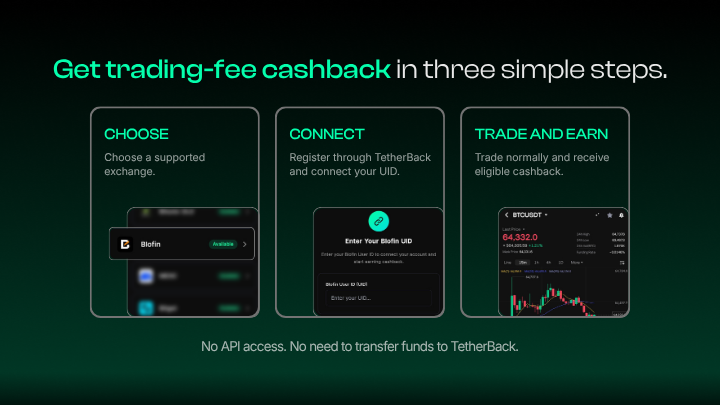
How to Get Bitget Cashback Through TetherBack
Step 1: Sign Up for TetherBack
Create your account using:
https://tetherback.com/signup?ref=cryptocashback
Step 2: Select Bitget
Find Bitget in the supported exchange section.
Step 3: Activate the Bitget Offer
Follow the partner registration process displayed through TetherBack.
Step 4: Create Your Eligible Bitget Account
Complete the applicable exchange registration.
Step 5: Find Your Bitget UID
Locate your unique UID inside your Bitget account.
Step 6: Connect Your UID
Add your Bitget UID to the TetherBack dashboard.
Step 7: Continue Trading on Bitget
Your trading still takes place directly through Bitget.
Step 8: Track Your Cashback
Monitor applicable trading fee cashback through your TetherBack account.
Bitget Fees FAQ
What are the Bitget futures fees in 2026?
The standard Bitget futures fees are currently:
0.02% maker
and
0.06% taker.
What is the Bitget maker fee?
The standard futures maker fee is 0.02%.
Maker orders generally add liquidity to the order book.
What is the Bitget taker fee?
The standard futures taker fee is 0.06%.
Taker orders generally remove existing liquidity.
How much does Bitget charge on a $100,000 futures trade?
At standard rates:
Maker:
$100,000 × 0.02% = $20
Taker:
$100,000 × 0.06% = $60
Does Bitget charge when opening and closing a futures position?
Transaction fees can apply to both opening and closing executions.
Therefore, traders should calculate both sides of a futures trade when estimating total transaction costs.
Are Bitget futures fees based on leverage?
Fees are calculated from the relevant order value rather than simply the amount of margin committed to the trade.
What are Bitget spot trading fees?
The standard spot fee is currently 0.10% for maker and taker trades. Eligible payment of fees using BGB reduces the rate to 0.08%, with further reductions potentially available through higher account tiers.
Does Bitget charge funding fees?
Perpetual futures can involve funding payments. Funding depends on the position value, applicable funding rate and settlement conditions.
Are Bitget funding fees the same as trading fees?
No.
Trading fees relate to order execution.
Funding is a separate periodic payment associated with perpetual futures positions.
Does Bitget charge copy trading fees?
Copy trading followers can face standard trading fees and, for futures, funding costs. Bitget also states that lead trader profit sharing is typically 10% to 20% of realized profit, depending on the applicable trader and arrangement.
Are Bitget trading bots free?
Bitget states that self-configured Spot Grid, Futures Grid and Position Grid bots do not have a separate subscription fee. Trades made by those bots still incur applicable trading fees.
Does Bitget charge P2P trading fees?
Bitget currently lists its P2P trading service as having no platform transaction fee. Other economic costs, such as pricing differences or payment-related costs, can still exist.
Does Bitget charge withdrawal fees?
Crypto withdrawal fees vary depending on the cryptocurrency and blockchain network selected. Check the displayed withdrawal fee before confirming a transaction.
How much cashback does TetherBack offer for Bitget?
The current TetherBack Bitget offer provides 50% trading fee cashback for eligible trading activity.
What are Bitget futures fees after 50% cashback?
Using the standard futures rates:
0.02% maker → 0.01% effective cost
0.06% taker → 0.03% effective cost
These are effective costs after receiving the full applicable cashback, not replacements for Bitget's standard fee schedule.
Are Bitget Fees High?
Whether Bitget fees are high depends on:
- Trading product
- Trading volume
- Maker or taker execution
- Account tier
- Holding period
- Funding
- Copy trading usage
- Cashback eligibility
For a low-frequency trader, the difference between 0.02% and 0.06% may have a relatively small dollar impact.
For someone generating $10 million or $20 million in monthly futures volume, the difference can amount to thousands of dollars.
That is why active traders should evaluate the effective cost of trading, rather than simply choosing an exchange based on one advertised percentage.
Bitget Fees Explained: Final Breakdown
The standard Bitget futures fees in 2026 are straightforward:
Maker: 0.02%
Taker: 0.06%
For spot trading, Bitget currently charges:
0.10% maker
0.10% taker
with an eligible BGB fee deduction reducing standard spot fees to 0.08%.
But transaction fees are only one part of the total cost.
Depending on how you trade, you may also need to account for:
- Funding payments
- Copy trading profit sharing
- Margin interest
- Withdrawal fees
- Slippage
- Other product-specific costs
For active futures traders, the standard maker and taker fees can accumulate rapidly as notional volume increases.
Through TetherBack, eligible Bitget traders currently receive 50% trading fee cashback.
Using the standard futures rates, this means:
0.02% maker → 0.01% effective cost after cashback
0.06% taker → 0.03% effective cost after cashback
For traders generating substantial recurring trading volume, reducing the effective fee paid on each eligible transaction can make a meaningful difference over time.
Get Bitget trading fee cashback through TetherBack
About TetherBack
TetherBack is a crypto trading fee cashback platform that helps eligible traders reduce their effective trading costs across supported partner exchanges.
Users select a supported exchange through TetherBack, create an eligible account, connect their exchange UID and continue trading directly on the exchange.
For Bitget, TetherBack currently offers 50% trading fee cashback, reducing the effective cost of the standard futures fee structure from:
0.02% to 0.01% for maker activity
and
0.06% to 0.03% for taker activity
The underlying exchange fee remains unchanged. The difference comes from recovering part of the eligible trading fees through cashback.