
Crypto Perpetual Futures Explained: What Beginners Need to Know
Crypto perpetual futures are one of the most common products in crypto derivatives trading, but they can be confusing for beginners at first. Many new traders hear terms like perpetual contracts, funding rate, liquidation, leverage, and margin, then assume perpetual futures are too advanced to understand.
The truth is simpler than it sounds. Crypto perpetual futures are contracts that let traders speculate on the price of a cryptocurrency without owning the asset directly, and unlike traditional futures, these contracts do not have a fixed expiration date. Their price is kept close to the spot market through a funding mechanism, which is one of the features that makes perpetual contracts different from standard dated futures.
For beginners, the most important point is this: perpetual futures can be useful for understanding how crypto derivatives work, but they also come with more risk than spot trading. Because they often involve leverage, a position can move from a small gain to a large loss much faster than many first-time traders expect.

What Are Crypto Perpetual Futures?
Crypto perpetual futures are derivative contracts based on the price of a cryptocurrency. Instead of buying Bitcoin, Ethereum, or another crypto asset in the spot market, a trader opens a contract linked to that asset’s price movement.
What makes perpetual futures different from traditional futures is that there is no expiry date. A traditional futures contract usually ends on a specific date. A perpetual futures contract can stay open indefinitely as long as the trader continues to meet margin requirements. That is why many people refer to them as crypto perpetuals or crypto perps.
So, what are crypto perpetuals in simple language? They are open-ended contracts that let you trade price direction. If you think the market will rise, you can go long. If you think it will fall, you can go short. You are not buying the coin itself. You are trading a contract whose value changes as the market moves.
Perpetual Futures Explained in the Simplest Way
A simple way to understand perpetual futures explained is to compare them with spot trading.
In spot trading, you buy the actual cryptocurrency. If you buy BTC in the spot market, you own BTC. If the price rises, the value of your holdings rises. If the price falls, your holdings lose value.
In perpetual futures trading, you do not necessarily own the coin. Instead, you open a contract that tracks the coin’s price. If you open a long position and the price rises, the contract gains value. If you open a short position and the price falls, the contract gains value. This makes perpetuals popular for traders who want to speculate on both upward and downward market moves.
That is the core of crypto perps for beginners. You are trading price exposure, not direct ownership.
Why Perpetual Futures Exist
Traditional futures contracts have expiry dates, which means traders may need to close or roll their positions forward. In crypto, where markets run around the clock, perpetual futures became popular because they remove that fixed expiry structure and allow continuous trading exposure.
For beginners, that matters because perpetual contracts are the format they are most likely to see first when learning about crypto derivatives. They are the most widely recognized type of crypto futures product on many major platforms and educational resources.
How Crypto Perpetual Futures Work
To understand how crypto perpetual futures work, focus on five ideas first:
Long and short positions
A long position means you expect the price to rise. A short position means you expect the price to fall. Perpetual futures make both directions easy to trade because you are dealing with contracts, not just direct asset purchases.
Margin
Margin is the collateral you use to open and maintain a position. It is the amount of capital supporting your trade.
Leverage
Leverage allows you to control a larger position using a smaller amount of capital. This can increase gains, but it can also increase losses very quickly.
Liquidation
If your losses become too large relative to your margin, the platform may automatically close your position. This is called liquidation.
Funding rate
Because perpetual contracts do not expire, exchanges use a funding mechanism to help keep perpetual prices close to spot prices. Depending on market conditions, longs may pay shorts or shorts may pay longs.
For beginners, funding is one of the most important things to understand because it is unique to perpetual contracts and directly affects the cost of holding a position over time.

What Is the Funding Rate?
The funding rate is a periodic payment exchanged between traders in long and short positions. Its main purpose is to help keep the price of a perpetual contract aligned with the spot market.
If the perpetual contract is trading above the spot price, the funding system often makes longs pay shorts. If the perpetual contract is trading below the spot price, the opposite may happen and shorts may pay longs. The exact timing and calculation can vary by platform, but the general purpose is consistent across most explanations of perpetual futures.
For a beginner, the key takeaway is simple: funding is part of the cost structure of crypto perpetual futures. Even if your trade direction is correct, funding payments can still affect your final result if you hold the trade long enough.
Perpetual Futures vs Traditional Futures
Perpetual futures and traditional futures are related, but they are not the same.
Traditional futures usually have a settlement date or expiration date. Perpetual futures do not. Traditional futures may trade with a built-in calendar structure, while perpetuals are designed for continuous exposure. That is why perpetual contracts rely on funding rates instead of expiry-based settlement mechanics to stay tied closely to the underlying market.
For beginners, this is one of the cleanest ways to answer the question, what are crypto perpetuals? They are futures-style contracts built for continuous trading without a normal expiration date.
Leverage in Crypto Perpetual Futures
Leverage is one of the main reasons traders are attracted to perpetual futures. It lets a trader open a larger position than they could with cash alone.
For example, if a trader uses 10x leverage, a relatively small amount of margin can control a much larger position. That means profits can be amplified if the market moves in the trader’s favor. But it also means losses are amplified if the market moves the other way. Even a small price move can have a large effect on the trader’s margin balance.
This is where many beginners misunderstand crypto perps. Leverage is not free profit. It is increased exposure. That increased exposure works both ways.
What Is Liquidation in Perpetual Futures?
Liquidation happens when a trader’s position no longer meets the platform’s minimum margin requirement, causing the position to be forcibly closed.
In the spot market, a coin can drop in price and the user simply continues holding it unless they choose to sell. In perpetual futures, a leveraged position can be closed automatically before the market recovers. That is why liquidation is such an important concept for beginners.
The higher the leverage, the less room a position usually has to move against the trader before liquidation becomes a problem. This is one reason crypto perpetual futures are often considered much riskier than ordinary spot trading.
A Simple Example for Beginners
Imagine ETH is trading at $3,000 and a beginner believes the price will rise. Instead of buying ETH in the spot market, they open a long ETH perpetual futures position.
If ETH rises to $3,100, the long position may gain value. If ETH falls to $2,900, the long position may lose value. If the loss becomes too large relative to the trader’s margin, the position may be liquidated.
Now imagine a trader believes ETH will fall. They can open a short perpetual futures position instead. If ETH drops, that short may gain value. If ETH rises, the short may lose value.
This is the basic structure of crypto perpetual futures. Traders are not required to own the underlying coin. They are using a contract to gain exposure to price movement in either direction.
Why Beginners Should Be Careful With Crypto Perps
Crypto perpetual futures are popular because they are flexible, fast-moving, and widely available in the broader crypto market. But popularity does not mean simplicity.
For beginners, the biggest risks are leverage, liquidation, volatility, and cost. A trader may correctly guess the long-term direction of the market and still lose money because of poor position sizing, overuse of leverage, or funding costs. Emotional mistakes also matter. New traders often enter oversized positions, react impulsively to market swings, or confuse high risk with high skill.
That is why crypto perps for beginners should always be explained with caution. They are useful to understand, but they are not beginner-friendly in the same way as simple spot buying.
Crypto Perpetual Futures vs Spot Trading
Spot trading is simpler because you are buying and owning the cryptocurrency directly. Perpetual futures are more complex because they introduce contract structure, leverage, funding, and liquidation.
Spot trading may still carry market risk, but it does not usually expose beginners to the same kind of forced liquidation risk that leveraged perpetual positions do. That is why many educational resources frame perpetuals as an advanced product compared with spot markets.
For someone learning what crypto perpetuals are, this comparison helps a lot. Spot is ownership. Perpetuals are price-based contract exposure.
What Beginners Should Learn First
Before trading crypto perpetual futures, beginners should understand:
-
The difference between spot trading and derivatives
-
How long and short positions work
-
What leverage does to gains and losses
-
Why margin matters
-
How liquidation happens
-
What funding rates are
-
How trading fees affect overall results
These are the real basics. Without them, perpetual contracts can look easier than they actually are.
Basic Tips for Crypto Perps for Beginners
If you are learning about crypto perpetual futures for the first time, keep the approach simple.
Start by understanding the structure before thinking about profit. Learn how long and short positions work. Learn how funding affects holding costs. Learn how liquidation can happen.
Keep risk awareness high. High leverage may look attractive, but it reduces your margin for error. Smaller positions and lower complexity are easier to understand.
Pay attention to costs. Trading fees and funding rates matter more than many beginners expect, especially if trades are frequent or held open for longer periods.
Most importantly, treat perpetual futures as a high-risk product that requires discipline, not as a shortcut.
How TetherBack Can Help Reduce Perpetual Futures Trading Fees
Once beginners understand how perpetual futures work, the next practical question is cost. Even if a trader becomes more careful with leverage and margin, fees still affect performance over time. This matters even more for perpetual futures traders because active trading can lead to repeated fee costs.
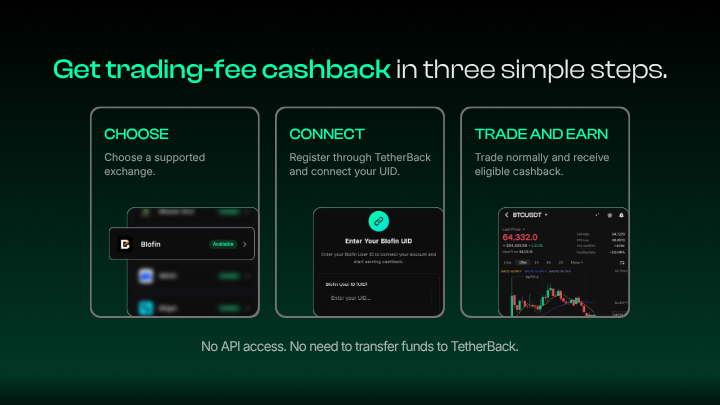
This is where TetherBack can help. Users sign up on TetherBack first, choose a supported exchange through the TetherBack platform, register through that exchange link, and then connect their new UID back to TetherBack. When completed correctly, eligible trading activity can generate cashback on fees.
For perpetual futures traders, that can help reduce part of the effective fee burden over time. It does not remove market risk, and it does not change how perpetual contracts, funding, or liquidation work. But it can make trading costs more efficient for users who follow the correct signup and account-linking process.
In simple terms, TetherBack works best as a cost-efficiency layer around your futures activity. Beginners still need to focus on learning about the market first, but reducing fee drag can be valuable in the long run.
Glossary
-
Crypto perpetual futures: Crypto derivative contracts with no fixed expiration date.
-
Perpetual contract: Another name for a perpetual futures contract.
-
Crypto perps: A short form of crypto perpetual futures.
-
Derivative: A financial contract whose value is based on an underlying asset.
-
Spot price: The current market price of an asset for immediate purchase or sale.
-
Long position: A trade that benefits if the asset price rises.
-
Short position: A trade that benefits if the asset price falls.
-
Margin: The collateral used to open and maintain a leveraged position.
-
Leverage: Borrowed exposure that allows a trader to control a larger position with less capital.
-
Liquidation: Forced closure of a position when margin requirements are no longer met.
-
Funding rate: A periodic payment exchanged between longs and shorts to help keep perpetual prices close to spot prices.
-
Position size: The total value of the trade.
-
Volatility: How quickly and sharply prices move.
-
Fee drag: The impact of repeated fees on overall trading results.
-
UID: The user account identifier used to connect an exchange account back to TetherBack.
FAQ
What are crypto perpetual futures?
Crypto perpetual futures are contracts that let traders speculate on the price of a cryptocurrency without owning it directly, and unlike traditional futures, they do not expire.
What is the difference between perpetual futures and normal futures?
The main difference is that perpetual futures have no fixed expiration date, while traditional futures usually settle or expire on a specific date.
Why do perpetual futures use funding rates?
Funding rates help keep the price of the perpetual contract close to the spot market price.
Are crypto perps good for beginners?
They can be learned by beginners, but they are more advanced and riskier than spot trading because they often involve leverage, margin, and liquidation.
Can you short with perpetual futures?
Yes. One of the main features of perpetual futures is that traders can open both long and short positions.
Do you own the coin in perpetual futures trading?
No. In perpetual futures, you trade a contract linked to the asset’s price rather than owning the cryptocurrency itself.
Is leverage necessary in perpetual futures?
No. Leverage is commonly available, but using more leverage also increases risk.
How can TetherBack help perpetual futures traders?
TetherBack can help eligible users reduce part of their trading fee costs through cashback when they sign up correctly through TetherBack, use a supported exchange, and link their UID properly.
Conclusion
Crypto perpetual futures are one of the most important products in crypto derivatives trading, and they are easier to understand once the jargon is stripped away.
They are open-ended contracts that track the price of a cryptocurrency, allow traders to go long or short, and use funding rates to stay close to the spot market.
For beginners, the key is not just learning what perpetual futures are, but understanding why they carry more risk than spot trading. Leverage, margin, liquidation, and funding all matter. And while cost-saving tools like TetherBack can help reduce part of the fee burden, the most important beginner mindset is still caution, clarity, and discipline.
About TetherBack
TetherBack is a crypto cashback and rewards platform built for active traders who want to reduce effective trading costs. By partnering with supported exchanges, TetherBack shares a portion of trading fee revenue back to users in the form of cashback.
The platform does not hold user funds and does not operate as an exchange. Traders continue to execute trades directly on their chosen exchange while earning rewards through the partnership structure.
TetherBack focuses on cost efficiency, transparency, and providing traders with a structured way to maximize value from their existing trading activity.