
WEEX Perpetual Futures: A Complete Guide to Leverage, Fees, and Cost Management in 2026
Perpetual futures are the core product on WEEX. They allow traders to take long or short positions on an asset's price without owning the underlying asset and without an expiry date on the contract. For traders new to WEEX or to perpetual futures generally, understanding the mechanics before committing capital is essential.
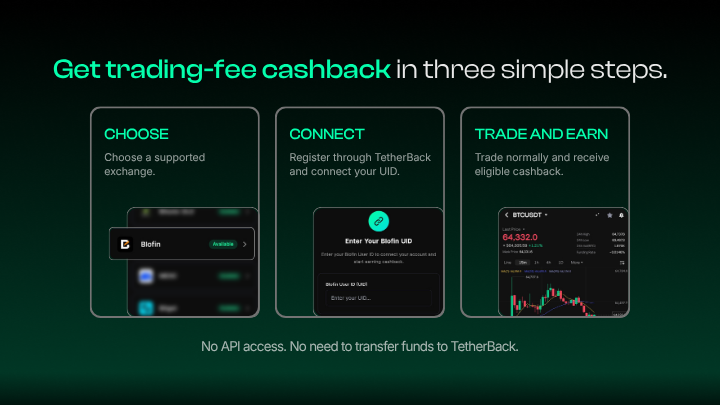
This guide covers how WEEX perpetual futures work, how the leverage system operates, the difference between margin modes, the full fee structure including funding rates, and how to reduce net trading costs through TetherBack's 65% cashback program.
What Are Perpetual Futures Contracts?
A perpetual futures contract is a derivative that tracks the price of an underlying asset without an expiration date. Unlike quarterly futures, perpetuals do not settle at a fixed date. Positions remain open until the trader closes them or until liquidation occurs.
The price of a perpetual contract is kept in alignment with the underlying spot price through a funding rate mechanism. Funding rates are periodic payments exchanged between long and short position holders. When the contract trades at a premium to spot, long holders pay short holders. When it trades at a discount, the payment flows in reverse.

How WEEX Perpetual Futures Work
WEEX perpetual futures are USDT-margined. This means margin, profit, and loss are all calculated and settled in USDT. You do not need to hold BTC to trade BTC/USDT perpetuals. The collateral and settlement currency is USDT throughout.
The platform supports over 650 futures pairs. Major pairs including BTC/USDT and ETH/USDT carry the deepest liquidity on WEEX. Altcoin perpetuals are available across a broad range of mid-cap and lower-cap assets, with liquidity varying by pair. Funding rates on BTC/USDT average approximately 0.005% per eight-hour period.
Orders on WEEX perpetuals follow standard types: market orders for immediate execution at the best available price (taker fee applies), and limit orders placed at a specified price to be filled when the market reaches it (maker fee applies if the order does not immediately fill).
Understanding WEEX Leverage
WEEX supports up to 400x leverage on select perpetual contracts. Leverage multiplies both potential gains and potential losses proportionally. At 400x, a 0.25% adverse price move is sufficient to fully liquidate the margin allocated to that position.
The table below shows the approximate price move required to trigger liquidation at different leverage levels, assuming no stop-loss is in place.
|
Leverage |
Approximate Price Move to Liquidation |
|
10x |
10.0% |
|
25x |
4.0% |
|
50x |
2.0% |
|
100x |
1.0% |
|
200x |
0.5% |
|
400x |
0.25% |
Most experienced futures traders operate between 5x and 50x leverage depending on their strategy and the volatility of the instrument. The availability of 400x leverage is a platform feature, not a recommended setting. Higher leverage reduces the price distance to liquidation to a margin where ordinary market fluctuations become a liquidation event.
Margin Modes: Isolated vs Cross
Isolated Margin
In isolated margin mode, only the capital explicitly allocated to a position is at risk. If that position reaches its liquidation price, only the allocated margin is lost. Your remaining account balance is unaffected. Isolated margin is the recommended mode for most users because it enforces a hard cap on per-position losses.
Cross Margin
In cross margin mode, all available account balance serves as collateral for all open positions. The exchange uses the full balance to prevent liquidation of individual positions, which means the liquidation price for any one position is further away. The trade-off is that a single position that moves severely against you can consume your entire account balance before liquidation is triggered.
Cross margin can be appropriate for experienced traders who manage multiple related positions and want to avoid isolated liquidations on individual legs of a hedged strategy. For general directional futures trading, isolated margin provides cleaner risk control.

WEEX Futures Fee Structure
For accounts registered through TetherBack, the applicable futures fees on WEEX are a maker rate of 0.007% and a taker rate of 0.028%. TetherBack's 65% cashback is applied to these fees, producing the net costs shown below.
|
Fee Type |
Gross Rate |
Cashback via TetherBack (65%) |
Net Cost |
|
Maker |
0.007% |
0.00455% |
0.00245% |
|
Taker |
0.028% |
0.01820% |
0.00980% |
|
Funding Rate |
Variable (avg 0.005% per 8hr) |
Not applicable |
Variable |
Funding rates apply separately and are not covered by the TetherBack cashback mechanism. They represent a real cost for traders who hold positions open through multiple funding periods and should be factored into overall cost calculations.
Funding Rates: How They Affect Your Position
Funding rates on WEEX perpetuals are charged every eight hours. The rate varies by contract and market conditions. For BTC/USDT, the average rate is approximately 0.005% per eight-hour period, which represents approximately $1.50 per day on a $10,000 long position held continuously.
For scalpers and intraday traders who open and close positions within a single funding period, funding rate costs are minimal or zero. For swing traders who hold positions across multiple days, funding rates accumulate as a real cost that should be accounted for in the overall trade thesis.
Net Cost Management with TetherBack
The three core components of trading cost on WEEX are maker and taker fees, funding rates, and slippage. TetherBack directly addresses the fee component through the 65% cashback rate. The table above shows how this changes the effective cost per trade.
For a trader executing $200,000 in average daily taker notional volume over 22 trading days per month, the gross taker fees at 0.028% total approximately $1,232. At 65% cashback, $800.80 is returned in USDT, reducing the net monthly fee burden to approximately $431.20. That cashback amount compounds across months and represents a direct cost saving that improves the profitability of any futures strategy that operates on thin margins.
Risk Management Best Practices on WEEX
Regardless of account size or experience level, the following practices apply to futures trading on any leveraged venue including WEEX.
-
Use isolated margin as the default mode. Switch to cross margin only when you have a specific strategic reason to do so.
-
Set a stop-loss on every position before entry, not after you are already in a loss.
-
Avoid using maximum leverage. The platform supports 400x but the vast majority of functional futures strategies operate well under 50x.
-
Size positions as a defined percentage of account equity. Do not allow any single position to exceed the loss threshold you have determined is acceptable.
-
Account for funding rate costs when holding positions across multiple eight-hour periods, particularly for trend-following or swing strategies.
-
Withdraw profits from the exchange periodically rather than accumulating all balances on a single platform.
Frequently Asked Questions
What is the maximum leverage available on WEEX perpetual futures?
WEEX supports up to 400x leverage on select perpetual contracts. The availability of this level of leverage does not make it suitable for most trading strategies. Even small adverse price moves liquidate positions at 400x, and the majority of experienced futures traders operate at significantly lower multiples.
What is the difference between isolated and cross margin on WEEX?
In isolated margin mode, the maximum you can lose on a position is the amount specifically allocated to it. In cross margin mode, all available account balance serves as collateral for all open positions. Isolated margin is generally the safer default for managing individual position risk.
How often are funding rates charged on WEEX?
Funding rates on WEEX perpetual futures are charged every eight hours: at 00:00, 08:00, and 16:00 UTC. The rate is variable and depends on the difference between the contract price and the underlying spot price. You pay funding if you are on the side that corresponds to the premium direction.
Do TetherBack cashback rebates apply to futures trading fees on WEEX?
Yes. The 65% cashback rate on TetherBack applies to the trading fees charged on all futures activity on your linked WEEX account, covering both maker and taker fees. Funding rate payments are not covered by the cashback mechanism.
Can I trade perpetual futures on WEEX without KYC?
Yes. WEEX does not require KYC for access to perpetual futures trading. Basic account registration is sufficient to begin.
What are USDT-margined futures?
USDT-margined futures are contracts where your margin (collateral), profit, and loss are all denominated and settled in USDT rather than in the base cryptocurrency being traded. This means you do not need to hold BTC to trade BTC/USDT perpetuals on WEEX.
How do I manage liquidation risk on WEEX?
The most effective liquidation risk management practices are: use isolated margin rather than cross margin on individual positions; set a stop-loss on every trade before opening; use leverage well below the platform maximum; and size positions as a defined percentage of account equity rather than using full available margin.
Glossary
-
Perpetual Futures Contract: A derivative instrument tracking an asset's price with no expiration date, kept in line with the spot market via funding rates.
-
Leverage: A multiplier applied to a position using borrowed capital. 10x leverage means a 10% move against the position results in full margin loss.
-
Isolated Margin: A margin mode where the maximum loss on a position is limited to the capital specifically allocated to that position only.
-
Cross Margin: A margin mode where the full account balance serves as collateral for all open positions, which can reduce per-position liquidation risk but exposes the full balance.
-
Funding Rate: A periodic payment exchanged between long and short perpetual futures holders, charged every eight hours, to keep the contract price aligned with the underlying spot market price.
-
USDT-Margined Futures: Futures contracts where margin, profit, and loss are denominated and settled in USDT rather than the base cryptocurrency.
-
Liquidation: The forced closure of a leveraged position by the exchange when losses reduce the margin below the maintenance threshold.
-
Maker Order: A limit order placed at a price not immediately matched, adding liquidity to the order book and qualifying for the lower maker fee.
-
Taker Order: A market order matched immediately against an existing order, removing liquidity from the order book and qualifying for the taker fee.
-
Notional Volume: The total dollar value of all trades executed, calculated as position size multiplied by entry price, used as the basis for fee calculation.
About TetherBack
TetherBack is a crypto cashback and rewards platform built for active traders who want to reduce effective trading costs. By partnering with supported exchanges, TetherBack shares a portion of trading fee revenue back to users in the form of cashback.
The platform does not hold user funds and does not operate as an exchange. Traders continue to execute trades directly on their chosen exchange while earning rewards through the partnership structure.
TetherBack focuses on cost efficiency, transparency, and providing traders with a structured way to maximize value from their existing trading activity.