
Is WEEX Safe? A 2026 Security and Regulatory Review for Traders
When evaluating any cryptocurrency exchange, security and regulatory standing are among the most important factors to assess. Trading fees and feature sets matter, but if a platform fails at the level of fund custody, compliance, or infrastructure security, everything else becomes secondary.
This review examines WEEX from a security and regulatory perspective for 2026. It is based on publicly available information, verified regulatory filings, and the exchange's own disclosed security infrastructure. The goal is an honest, factual assessment rather than a promotional endorsement.
WEEX Regulatory Status in 2026
WEEX holds three regulatory registrations: a Money Services Business (MSB) designation with the US Financial Crimes Enforcement Network (FinCEN), a corresponding MSB registration with Canada's FINTRAC, and a Financial Services Authority (FSA) license from St. Vincent and the Grenadines.
MSB registration is a compliance designation. It permits WEEX to operate as a money services business in those jurisdictions and obligates it to maintain anti-money-laundering (AML) controls. It does not constitute a derivatives trading license of the kind required to offer leveraged products to retail users in the EU, UK, or Singapore.
WEEX does not hold a license from the FCA (UK), MAS (Singapore), MiFID II regulated authorities (EU), or the CFTC (US). Traders in jurisdictions with strict derivatives access rules should verify the regulatory position in their specific country before opening an account.

WEEX Security Infrastructure
WEEX stores the majority of user assets in cold storage, keeping them offline and therefore isolated from internet-facing attack vectors. The exchange supports two-factor authentication via TOTP authenticator apps and SMS, with the TOTP app option being the more secure choice.
Additional account-level security tools include an anti-phishing code, which is a unique string configured by the user that appears in all official WEEX emails, helping distinguish legitimate communications from imitation attempts. IP whitelisting is also available, allowing users to restrict withdrawal initiation to pre-approved IP addresses.
|
Security Feature |
WEEX Status |
|
Regulatory Registration |
US FinCEN MSB, Canadian FINTRAC MSB, SVG FSA |
|
Tier-1 Derivatives License |
Not held (no FCA, MAS, CFTC, or MiFID II license) |
|
Cold Storage |
Majority of user assets held offline |
|
Two-Factor Authentication |
Yes (TOTP app and SMS options) |
|
Protection Fund |
1,000 BTC reserve maintained by the exchange |
|
Anti-Phishing Code |
Yes, configurable per account |
|
IP Whitelisting |
Available for withdrawal restrictions |
|
KYC Requirement |
Optional for basic trading; may be required at higher withdrawal levels |
|
Major Security Breaches |
None publicly reported since 2018 founding |
|
Proof of Reserves |
Not publicly verified via third-party audit as of this writing |
The 1,000 BTC Protection Fund
WEEX maintains a 1,000 BTC protection fund. This reserve is designed to compensate users in the event of a security incident resulting in fund loss. Protection funds are a meaningful security commitment: exchanges including Bitget and OKX maintain similar reserves, though the size differs.
The existence of this fund signals institutional intent to stand behind user balances in a worst-case scenario. However, traders should note that the specific activation conditions and governance of the fund are not publicly documented in detail.
KYC and Account Verification Policy
WEEX does not require KYC verification for basic account functionality. Users can access spot trading, perpetual futures, and copy trading without completing identity verification. For withdrawals above certain volume thresholds, enhanced verification may be required depending on the user's jurisdiction and account activity profile.
This approach gives traders flexibility in regions where KYC friction is a concern. It also means that WEEX carries a different risk profile from fully KYC-gated exchanges in terms of regulatory exposure.
Track Record: Has WEEX Been Compromised?
WEEX has operated since 2018 without a publicly documented major security incident involving user fund losses. This is a constructive record over a six-plus year operating period that spans multiple volatile market cycles. No exchange should be evaluated solely on absence of incidents, but a clean track record across that time frame is a meaningful positive signal.
What WEEX Does Not Have
For traders who require the highest level of regulatory assurance, there are areas where WEEX falls short compared to more heavily regulated platforms. WEEX does not hold a tier-one derivatives license. It has not published a third-party verified proof-of-reserves report as of this writing, which limits independent confirmation that all user assets are fully backed. Traders who require this type of transparency may wish to weigh it in their exchange selection.

TetherBack and WEEX: The Connection Explained
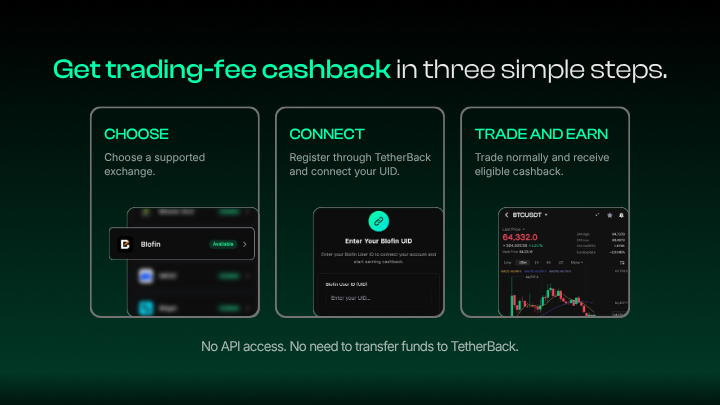
TetherBack connects to your WEEX account using only your account UID. No API key is required. No withdrawal permissions are granted at any level. The link is purely administrative, enabling TetherBack to verify and attribute the fee volume generated by your account for the purpose of calculating and distributing cashback.
This architecture means that linking your WEEX account to TetherBack introduces no additional security exposure to your WEEX funds. There is no mechanism through which TetherBack can move, access, or affect your holdings.
Frequently Asked Questions
Is WEEX a regulated exchange?
WEEX holds MSB registrations with US FinCEN and Canadian FINTRAC, as well as an FSA license from SVG. These are compliance registrations rather than derivatives trading licenses. WEEX does not hold a tier-one derivatives license such as FCA (UK), MAS (Singapore), or MiFID II (EU).
Has WEEX ever been hacked?
No publicly reported major security incident involving user fund losses has been associated with WEEX since its 2018 founding. This is a positive track record, though past performance does not guarantee the same outcome going forward.
Does WEEX require KYC?
WEEX does not require KYC verification for basic account functionality including spot trading, futures trading, and copy trading. Identity verification may be required for withdrawals above certain thresholds or in jurisdictions subject to enhanced compliance requirements.
What is WEEX's protection fund?
WEEX maintains a 1,000 BTC protection fund. This reserve is intended to compensate users in the event of a security incident resulting in fund loss. It represents a security commitment, though the specific conditions and terms governing fund usage have not been publicly detailed.
Is TetherBack safe to connect to my WEEX account?
Yes. TetherBack connects using only your WEEX UID. No API key is required, and no withdrawal permissions are granted. Linking your WEEX account to TetherBack does not expose your funds or credentials.
Does WEEX have proof of reserves?
As of this article, WEEX has not published a third-party verified proof-of-reserves report on the same schedule as exchanges such as OKX, which publishes monthly reports. Traders who require this level of transparency may wish to factor it into their assessment.
Is my money safe on WEEX?
No cryptocurrency exchange can guarantee the absolute safety of user funds. WEEX has maintained an operational record since 2018 without a publicly reported security breach, holds a 1,000 BTC protection fund, and stores the majority of assets in cold storage. Traders should nonetheless size positions appropriately and withdraw assets from any exchange when not actively trading.
Glossary
-
MSB (Money Services Business): A regulatory designation in the US and Canada permitting a business to operate financial services. It is a compliance registration rather than a trading license.
-
KYC (Know Your Customer): An identity verification process required by financial regulators to prevent money laundering and fraud.
-
Cold Storage: The practice of holding cryptocurrency assets in wallets that are not connected to the internet, reducing exposure to online attacks.
-
2FA (Two-Factor Authentication): A security mechanism requiring two separate forms of verification to access an account.
-
Protection Fund: A reserve of cryptocurrency maintained by an exchange to compensate users in the event of a security breach causing fund loss.
-
UID (User ID): A unique account identifier used by TetherBack to link exchange accounts without requiring API credentials.
-
Proof of Reserves: A cryptographic audit confirming that an exchange holds sufficient assets to cover all user account balances at a given point in time.
-
FSA (SVG): The Financial Services Authority of St. Vincent and the Grenadines, a regulatory body under which some offshore cryptocurrency exchanges are registered.
-
Anti-Phishing Code: A unique string set by the user that appears in all official exchange emails, helping to distinguish legitimate communications from fraudulent imitations.
-
IP Whitelisting: A security feature that restricts account access or withdrawal initiation to pre-approved IP addresses only.
About TetherBack
TetherBack is a crypto cashback and rewards platform built for active traders who want to reduce effective trading costs. By partnering with supported exchanges, TetherBack shares a portion of trading fee revenue back to users in the form of cashback.
The platform does not hold user funds and does not operate as an exchange. Traders continue to execute trades directly on their chosen exchange while earning rewards through the partnership structure.
TetherBack focuses on cost efficiency, transparency, and providing traders with a structured way to maximize value from their existing trading activity.