
How to Build a Smarter Cashback Strategy for Long-Term Crypto Trading
A lot of traders think about cashback in a very short-term way. They see a percentage, they like the idea of getting something back, and that is where the thought ends.
But the traders who get the most value from cashback usually look at it differently. They treat it as part of a long-term trading setup, not just a small extra perk.
That is the smarter approach. Cashback works best when it is part of a bigger plan to reduce costs and improve efficiency over time.
Think of Cashback as Cost Reduction, Not Extra Profit
The first step is understanding what cashback really does.
Cashback is not a trading strategy. It does not create profit on its own, and it does not fix poor trading decisions. What it does is reduce your effective trading cost by returning part of the fees generated from your activity.
That may sound simple, but it matters a lot over time. A trader who consistently reduces costs will usually be in a stronger position than one who ignores them.
The real value of cashback is not that it feels exciting on one trade. The real value is that it can help improve long-term efficiency.
Start With the Right Foundation
A strong cashback strategy starts with choosing the right setup from the beginning.
That means more than just looking at the biggest cashback number. You also need to consider the fee structure behind it. If you are comparing exchanges, the cashback rate should be viewed together with maker fees and taker fees, because those numbers shape the actual cost of trading.
For example, WEEX has the highest cashback rate at 65.00% and the lowest maker fee at 0.007%, while Bitunix has the second-highest cashback rate at 60.00% and the lowest taker fee at 0.024%. That already shows why long-term planning matters. The better choice depends on how you trade, not just which headline number looks best.
Match the Strategy to the Way You Trade
A smarter cashback strategy should fit your real trading style.
If your orders usually rest on the order book, maker fees are likely to matter more in the long run. If your trades fill immediately more often, taker fees may have a bigger impact on your total cost.
This is why the best cashback setup is different for different traders. One trader may benefit more from the exchange with the strongest maker-side advantage. Another may get more value from the exchange with the better taker-side cost.
A long-term strategy only works when it matches how you actually trade, not how you think you should trade.
Use Campaigns as a Bonus, Not the Main Plan
Campaigns can increase the value of your cashback setup, but they should never be the whole strategy.
The better way to use campaigns is as an extra layer on top of a solid base. If your main exchange setup already makes sense for your trading style, then a relevant campaign can improve the value even further.
That is useful, but it should stay in the right place. A short-term campaign can add value, but it should not be the reason you build your entire cashback plan around one exchange.
Long-term strategy always comes first. Campaigns are there to support it, not replace it.
Track Your Costs Regularly
A smart cashback strategy only works if you actually pay attention to your costs.
A lot of traders think they know what they are paying, but they never look at the numbers properly. Over time, that creates a blind spot. If you are not tracking your fee impact, you are not really measuring the value of cashback either.
This is why it helps to regularly review how much your trading fees are costing you and how much of that cost is being reduced through cashback. Once you start looking at cashback as part of fee management, it becomes much easier to see its long-term value.
Use the Calculator to Stay Realistic
A calculator is useful because it keeps your expectations grounded.
Instead of guessing what cashback might look like, it helps you estimate potential rewards based on your own trading volume. That matters because a smarter strategy is built on realistic assumptions, not vague expectations.
It also helps you think long term. A small difference may not feel important in one day or one week, but once you estimate how that value scales over a longer period, the benefit becomes easier to understand.
Stay Consistent Instead of Chasing Small Advantages
One of the biggest mistakes traders make is constantly switching focus for tiny short-term gains.
A long-term cashback strategy works best when it supports consistency. If you are always chasing the next small advantage without any structure, your setup becomes messy and harder to manage.
The better approach is to choose a setup that fits, use it properly, and let the value build over time. Cashback becomes much more meaningful when it is part of a steady process rather than a random habit.
Build Around Efficiency, Not Excitement
The strongest trading setups are usually built around efficiency, not excitement.
Cashback falls into that same category. It may not feel dramatic, but it improves something that matters a lot: your cost base. Over months and years, even small improvements in cost efficiency can make a noticeable difference.
That is why the smartest cashback strategy is usually the least flashy one. It is the one that quietly supports better long-term trading habits.
Conclusion
A smarter cashback strategy is not about chasing the highest number for a week. It is about building a setup that continues to work over time.
Start by treating cashback as cost reduction, not profit. Choose the right exchange based on how you actually trade. Use campaigns as an added benefit, not the foundation. Track your fee impact, use the calculator to stay realistic, and focus on consistency instead of short-term noise.
That is how cashback becomes more than a small extra. It becomes part of a stronger long-term trading approach.
FAQ
Is cashback a trading strategy?
No. Cashback is a cost-reduction benefit, not a trading strategy on its own.
Should I choose an exchange based only on the highest cashback rate?
No. Cashback rate matters, but maker fees, taker fees, and your trading style matter too.
Are campaigns important in a long-term cashback strategy?
Yes, but only as an added benefit. Campaigns should support a strong base strategy, not replace it.
Why does consistency matter more than chasing small advantages?
Because long-term value usually comes from a setup that stays efficient over time, not from constantly changing direction for short-term gains.
About TetherBack
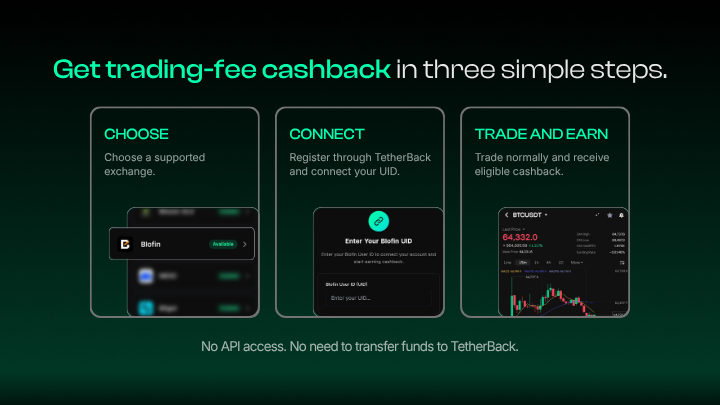
TetherBack is a crypto cashback and rewards platform built for active traders who want to reduce effective trading costs. By partnering with supported exchanges, TetherBack shares a portion of trading fee revenue back to users in the form of cashback.
The platform does not hold user funds and does not operate as an exchange. Traders continue to execute trades directly on their chosen exchange while earning rewards through the partnership structure.
TetherBack focuses on cost efficiency, transparency, and providing traders with a structured way to maximize value from their existing trading activity.