
WEEX vs OKX: Which Is Better for Futures Traders in 2026?
WEEX and OKX both operate primarily as derivatives-focused exchanges. Both support perpetual futures, high leverage, and broad altcoin coverage. Both occupy a similar structural position in the market: offshore platforms built for active traders rather than retail banking integration.
For a futures trader deciding between the two in 2026, the comparison is a practical one with meaningful differences across cost, access, regulatory standing, and feature set. This article examines those differences directly so traders can make an informed decision based on their own priorities.
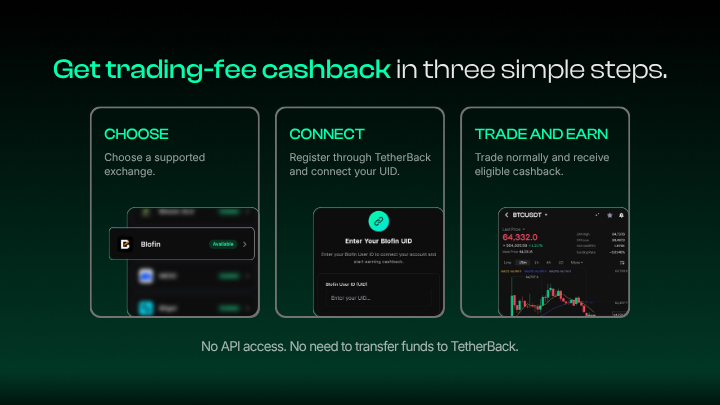
One relevant distinction upfront: WEEX is a TetherBack partner exchange, which means TetherBack users who register through the partner link can access a reduced fee rate and a 65% cashback on all fees paid. OKX is not a TetherBack partner. This affects the effective cost comparison in a material way.

Platform Overview
|
Feature |
WEEX |
OKX |
|
Founded |
2018 |
2017 |
|
Primary Focus |
Derivatives and copy trading |
Multi-product: spot, derivatives, DeFi, Web3 |
|
Max Leverage |
Up to 400x on select contracts |
Up to 125x on perpetual futures |
|
Spot Assets |
1,000+ |
350+ |
|
Futures Pairs |
650+ |
Extensive (100+ perpetuals) |
|
Options Trading |
No |
Yes (BTC and ETH) |
|
Copy Trading |
Yes (5,000+ lead traders) |
No native copy trading |
|
KYC Requirement |
Optional for basic trading |
Required for most features and withdrawals |
|
Regulation |
US MSB, Canadian MSB, SVG FSA |
MFSA (Malta), VARA (UAE), SCB, DASP |
|
AML History |
None reported |
$505M AML settlement, February 2025 |
|
Proof of Reserves |
Not publicly verified |
Monthly third-party reports |
|
TetherBack Partner |
Yes (65% cashback) |
No |
Fee Comparison
Standard fees on WEEX are 0.02% maker and 0.08% taker for non-VIP users on futures. OKX charges 0.02% maker and 0.05% taker as standard. On that basis alone, OKX has lower taker fees.
The picture shifts substantially for TetherBack-registered WEEX users. Through the TetherBack partnership, accounts access a maker rate of 0.007% and a taker rate of 0.028%, with 65% cashback applied on top. The effective net taker cost after cashback is approximately 0.0098%, which is lower than OKX's standard taker rate of 0.05%.
|
Fee Type |
WEEX Standard |
WEEX via TetherBack |
OKX Standard |
|
Futures Maker |
0.020% |
0.007% + 65% rebate = net 0.00245% |
0.020% |
|
Futures Taker |
0.080% |
0.028% + 65% rebate = net 0.0098% |
0.050% |
|
Spot Maker |
N/A |
N/A |
0.080% |
|
Spot Taker |
N/A |
N/A |
0.100% |
For traders who register WEEX through TetherBack, the net cost advantage over OKX's standard fee structure is significant, particularly on taker-dominant futures strategies.
Leverage and Contract Types
WEEX supports up to 400x leverage on select perpetual contracts. OKX supports up to 125x leverage on perpetuals and up to 100x on certain pairs. For traders who use moderate leverage (10x to 50x), both exchanges accommodate this range comfortably. The WEEX advantage becomes relevant only if a strategy requires leverage above 125x.
OKX offers a broader product range at the derivatives layer. In addition to perpetuals, OKX provides quarterly expiry futures and options on BTC and ETH, including an options chain view and a block-trade marketplace for large positions. WEEX does not offer options. For traders whose strategy includes options exposure, OKX is the more complete venue.
Asset Selection
WEEX lists over 1,000 cryptocurrencies across spot and futures markets, with over 650 futures pairs. OKX lists approximately 350 spot tokens. In terms of raw breadth, WEEX has the larger pool of tradeable assets, which may benefit traders who focus on mid-cap and emerging altcoin futures.
KYC and Access Requirements
WEEX does not require KYC for core trading features including spot, futures, and copy trading. Verification may be needed at higher withdrawal volumes. This makes WEEX more immediately accessible in markets where exchange KYC represents a practical barrier.
OKX enforces KYC as a requirement for most features. Withdrawal capacity, product eligibility, and support resolution speed are all tied to verification level. US users face further restrictions, with derivatives entirely unavailable in the US version of the platform.

Security and Regulatory Standing
OKX holds more substantial regulatory credentials, including licenses from MFSA (Malta), VARA (Dubai), SCB, and DASP. It publishes monthly proof-of-reserves reports and stores over 95% of user assets in cold storage. However, OKX's operator settled an AML enforcement action with the US Department of Justice and CFTC for $505 million in February 2025, which is a significant compliance failure that traders in regulated environments should factor into their assessment.
WEEX holds MSB registrations in the US and Canada, and an SVG FSA license. It has no reported major security incidents since 2018 and maintains a 1,000 BTC protection fund. WEEX has not published third-party proof-of-reserves reports. For traders who prioritize broader regulatory backing or independent reserve verification, OKX is the stronger choice on this dimension.
Copy Trading
Copy trading is a native feature on WEEX, with access to over 5,000 verified lead traders and configurable settings including leverage mode, investment amount, and the trading pairs eligible for replication. OKX does not offer copy trading. For traders who want automated position mirroring as part of their strategy, WEEX is the clear choice.
Which Exchange Suits You Better?
WEEX is the stronger option if you want higher leverage caps (up to 400x), no mandatory KYC for trading access, native copy trading, a broader altcoin futures selection, and the ability to reduce net trading costs substantially through TetherBack cashback at 65%.
OKX is the stronger option if you need broader regulatory backing, options trading on BTC and ETH, independent proof-of-reserves reports, and a more mature ecosystem that includes Web3 tools, DeFi access, and a more established institutional presence.
For active futures traders who are cost-sensitive and not operating in jurisdictions that require tier-one licensing, the WEEX plus TetherBack combination delivers a materially lower net trading cost than OKX at standard rates.
Frequently Asked Questions
What is the maximum leverage on WEEX versus OKX?
WEEX supports up to 400x leverage on select perpetual contracts. OKX supports up to 125x leverage on perpetual futures. Traders who require higher leverage caps will find WEEX more accommodating, though high leverage carries significant liquidation risk.
Which exchange has lower fees, WEEX or OKX?
OKX has lower standard futures fees (0.02% maker, 0.05% taker) compared to WEEX's standard rates (0.02% maker, 0.08% taker). However, traders who register WEEX through TetherBack access a partner rate of 0.007% maker and 0.028% taker with 65% cashback applied, producing net costs that are substantially lower than OKX's standard rates.
Does WEEX require KYC like OKX?
WEEX does not require KYC for basic trading access including futures and copy trading. OKX enforces KYC as a requirement for most features, withdrawal processing, and account tier upgrades.
Is OKX available in all countries?
OKX imposes significant regional restrictions. US residents can access only a spot-only version with no derivatives. Residents of New York, Texas, and several other US territories are blocked entirely. UK users face derivatives restrictions. Derivatives access also varies across Canada, Hong Kong, and other jurisdictions.
Does either exchange offer copy trading?
WEEX includes a copy trading feature with access to over 5,000 lead traders and configurable settings including leverage mode, trading pairs, and investment amount. OKX does not offer native copy trading.
Which exchange has more listed assets?
WEEX lists over 1,000 cryptocurrencies across spot and futures markets. OKX lists approximately 350 spot tokens. In terms of raw asset diversity, WEEX has the broader selection.
Can I earn cashback on OKX through TetherBack?
No. OKX is not a TetherBack partner exchange. TetherBack cashback is only available on partner exchanges including WEEX, Aivora, Bitunix, Bitget, BingX, BloFin, and MEXC.
Glossary
-
Perpetual Futures: Derivative contracts tracking an asset price with no expiration date, settled continuously via funding rates.
-
Leverage: A multiplier applied to a position using borrowed capital, amplifying both potential gains and potential losses.
-
Maker Order: A limit order placed at a price not immediately matched, adding liquidity to the order book and qualifying for the lower maker fee.
-
Taker Order: A market order matched immediately against an existing order, removing liquidity and qualifying for the higher taker fee.
-
Isolated Margin: A margin mode capping the maximum loss on a position to the capital specifically allocated to it.
-
Cross Margin: A margin mode where all available account balance serves as collateral for all open positions simultaneously.
-
VARA: The Virtual Assets Regulatory Authority of Dubai. One of the regulatory bodies under which OKX holds a license for operations in the UAE.
-
MFSA: The Malta Financial Services Authority, under which OKX holds a European license.
-
MSB: Money Services Business. A US and Canadian compliance designation permitting the holder to operate financial services in those jurisdictions.
-
Options Trading: A derivative instrument granting the holder the right, but not the obligation, to buy or sell an asset at a predetermined price before or at expiry.
About TetherBack
TetherBack is a crypto cashback and rewards platform built for active traders who want to reduce effective trading costs. By partnering with supported exchanges, TetherBack shares a portion of trading fee revenue back to users in the form of cashback.
The platform does not hold user funds and does not operate as an exchange. Traders continue to execute trades directly on their chosen exchange while earning rewards through the partnership structure.
TetherBack focuses on cost efficiency, transparency, and providing traders with a structured way to maximize value from their existing trading activity.