
3 US Stocks to Watch During Oil Market Volatility
Oil prices are no longer just a commodities story. As geopolitical tension around the Strait of Hormuz continues to affect energy flows, the impact is spreading well beyond crude itself. Brent oil recently pushed close to $100 per barrel, and that kind of move is now influencing stock performance across multiple sectors. Investors are trying to figure out which companies could benefit, which ones may face pressure, and which names offer the most interesting setup right now.
Not every stock reacts to oil in the same way. Some rise with higher crude prices, while others struggle as fuel costs climb. Some also have company-specific catalysts that make the story even more interesting. Right now, three US stocks stand out for very different reasons: ExxonMobil, Delta Air Lines, and Devon Energy.
Each of them reflects a different side of the oil story. ExxonMobil is a direct energy beneficiary, Delta represents a recovery trade that could improve if oil cools, and Devon Energy sits in a strong position as an oil-linked stock with an added merger catalyst. Together, they show how one macro theme can create very different opportunities depending on the business behind the stock.
Why Oil Prices Are Moving Stocks Again
The current oil rally has been driven largely by supply concerns and shipping disruption fears tied to the Strait of Hormuz. Even though prices have cooled slightly from the highs, the bigger issue remains active. Markets are still pricing in the possibility of tighter energy supply, higher shipping costs, and continued geopolitical instability.
That matters because energy prices affect sectors very differently. Oil producers tend to benefit when crude prices rise because stronger commodity pricing can improve revenue and cash flow. Airlines often face the opposite effect because fuel is one of their largest operating costs. At the same time, some companies have internal business developments that make them worth watching regardless of the oil backdrop.
This is why ExxonMobil, Delta Air Lines, and Devon Energy stand out now. The first two reflect opposite sides of the oil trade, while the third combines commodity momentum with a major corporate catalyst.
ExxonMobil Looks Like a Direct Oil Winner
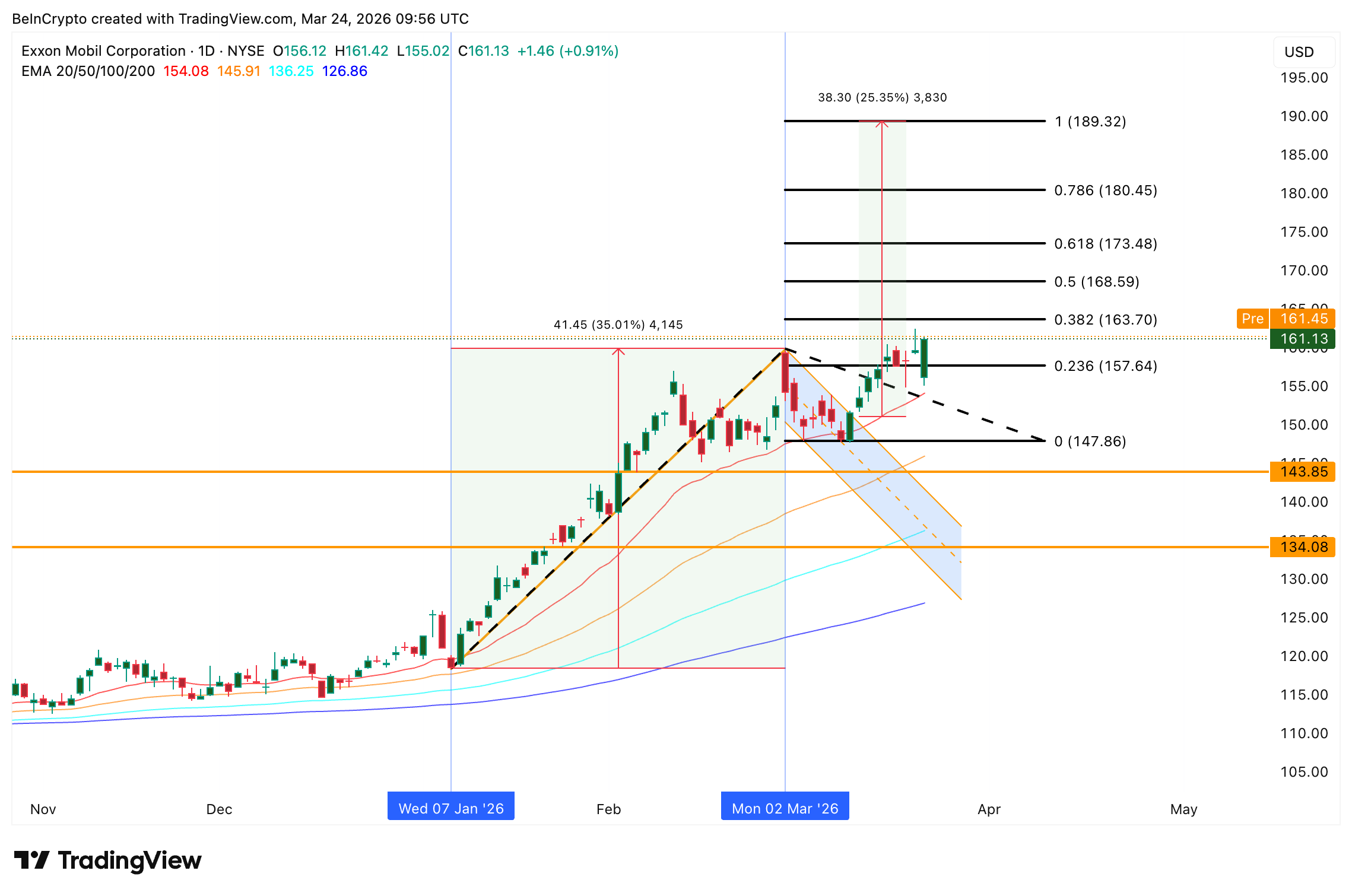
ExxonMobil appears to be one of the clearest stock market beneficiaries of the current oil environment. The company benefits directly from stronger crude prices, and its production profile gives it an added layer of appeal. A large part of its production strength comes from the Permian Basin and Guyana, which helps reduce the direct geopolitical exposure tied to Gulf shipping disruption.
That is an important detail. Investors are not just looking for oil-linked stocks. They are looking for oil-linked stocks that can benefit from higher global prices without carrying the same operational risk as companies more tightly connected to the affected region.
Technically, ExxonMobil also looks strong. The stock has been trading near record territory and appears to be holding above key moving averages. That suggests the trend remains healthy as long as oil prices stay supported and the broader market continues viewing energy as a relative safe zone.
For investors who want a large-cap name with direct exposure to stronger oil prices, ExxonMobil looks like one of the more straightforward choices.
Delta Air Lines Could Benefit if Oil Pressure Eases
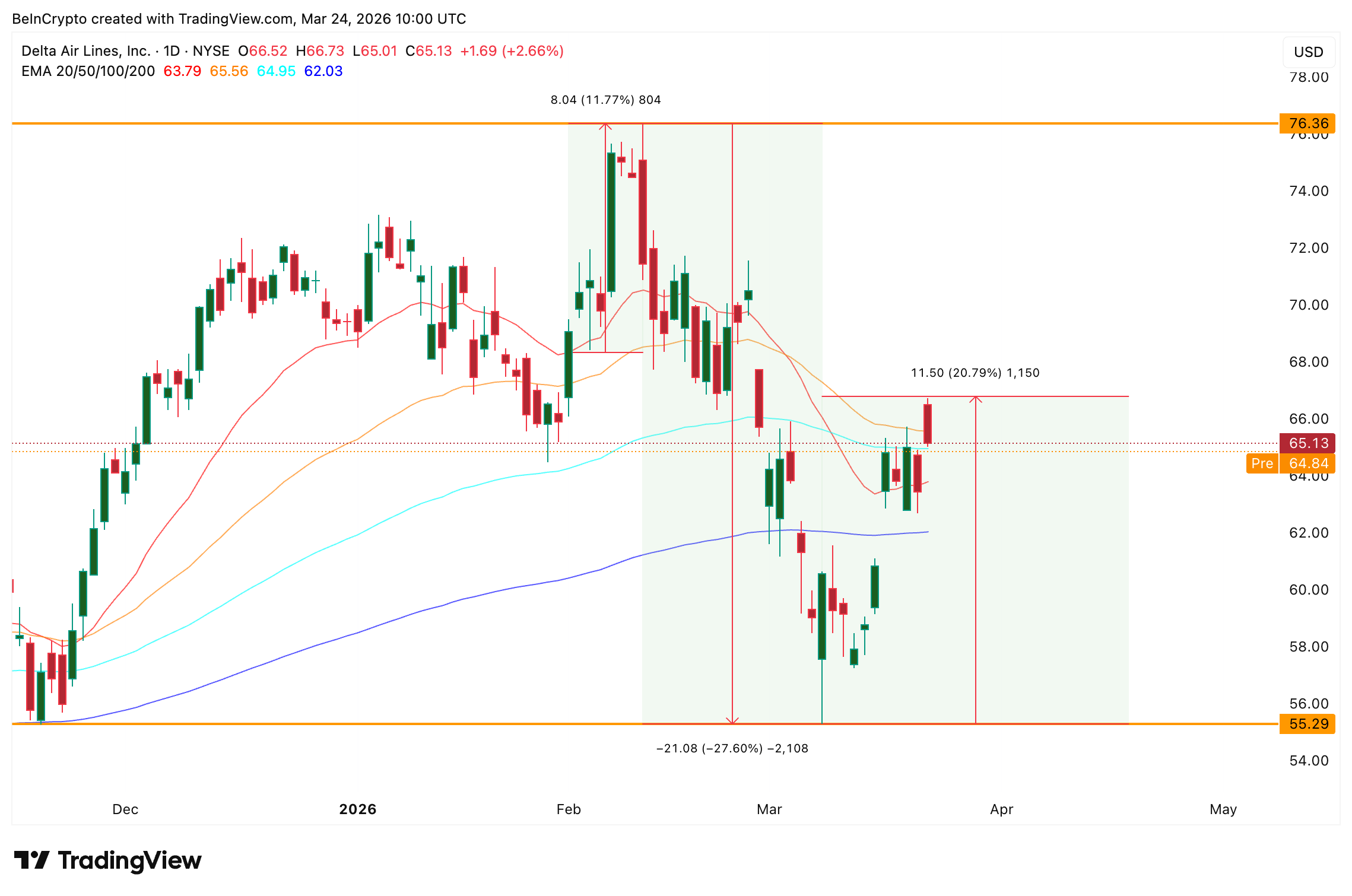
Delta Air Lines sits on the other side of the trade. Airlines usually suffer when oil prices rise because higher crude often leads to higher jet fuel costs. That can put pressure on margins and weigh on sentiment, even if travel demand remains healthy.
That dynamic has already shown up in Delta’s stock performance. The stock dropped sharply when oil spiked, as investors quickly priced in the risk of higher operating costs. But what makes Delta interesting now is that it has already started to recover from the lows.
This creates a more balanced setup. If oil prices stay high or rise further, Delta could remain under pressure. But if the current geopolitical stress starts to ease and oil retreats, Delta may have more room to recover. In that sense, the stock is becoming a cleaner way to express a softer-oil view rather than an energy bullish view.
Investors who believe the worst of the oil shock may already be priced in could see Delta as a rebound candidate. It is not a direct winner from the current situation, but it could become more attractive if the macro pressure starts fading.
Devon Energy Has Oil Strength and a Second Catalyst
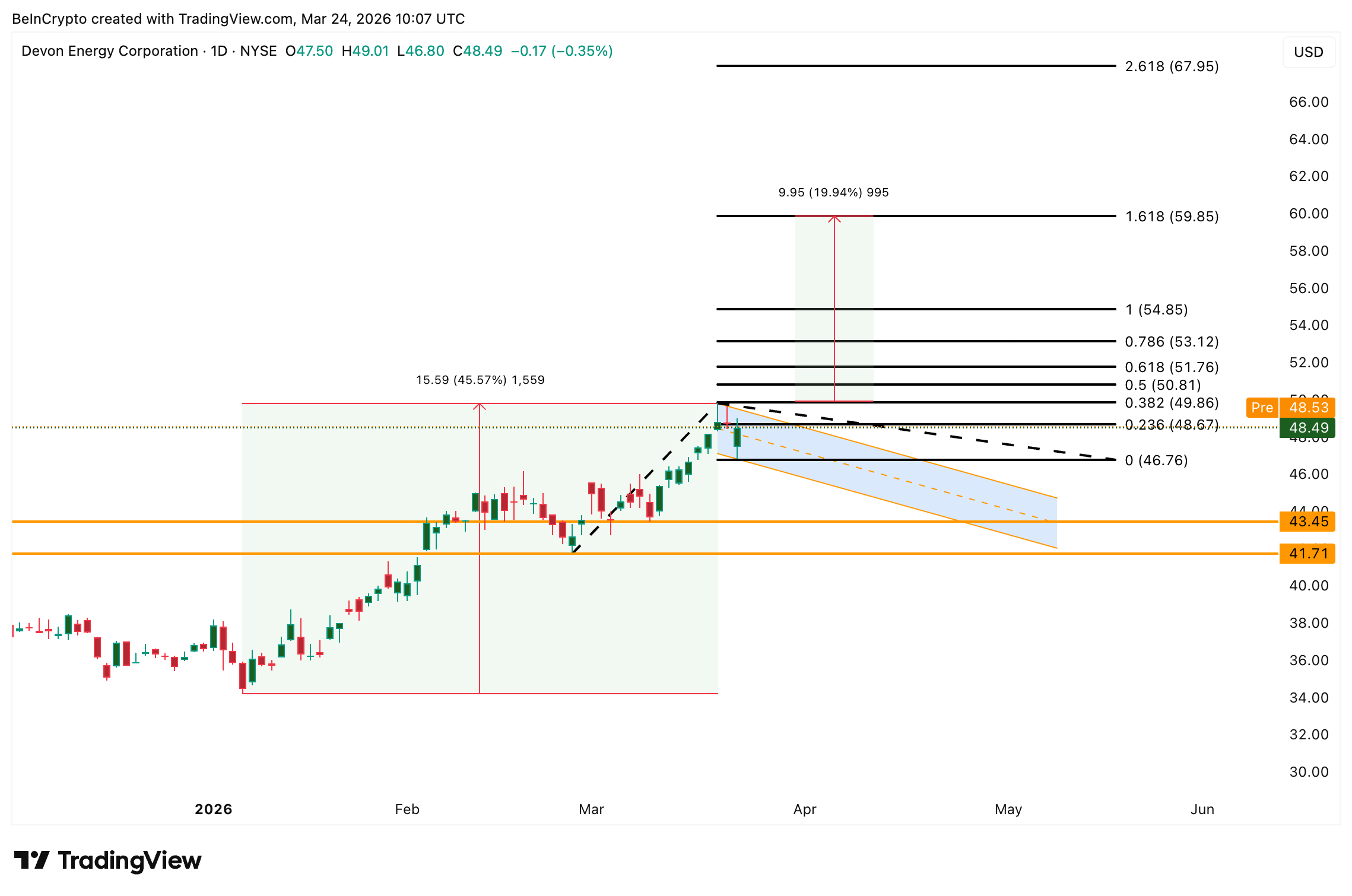
Devon Energy may be the most aggressive opportunity of the three. Like ExxonMobil, it benefits from stronger oil prices. But unlike Exxon, it also has a major company-specific catalyst through its planned Coterra acquisition.
That merger angle matters because it gives Devon another reason to stay in focus even beyond oil itself. If the deal closes as expected and delivers the projected synergies, investors may start looking at Devon not only as an oil play, but also as a transformation story. The possibility of stronger post-merger scale and improved dividend potential makes the setup more compelling.
This gives Devon a different profile from both ExxonMobil and Delta. Exxon looks like the more stable large-cap energy winner. Delta is a recovery name tied to lower fuel costs. Devon sits closer to a higher-beta growth and restructuring story within the energy sector.
That kind of combination can attract traders who want more upside potential, though it also usually comes with more sensitivity to both oil prices and execution risk.
Which of the Three Looks Most Attractive
That depends entirely on the kind of view an investor has on oil and market conditions.
If you believe oil prices will remain firm or move higher, ExxonMobil and Devon Energy are the stronger names to watch. Exxon offers the more established large-cap profile, while Devon may offer more upside if both oil and the merger narrative stay favorable.
If you think oil prices may cool as tensions ease, Delta Air Lines could become the more attractive recovery trade. Airlines tend to respond quickly when fuel cost pressure starts coming down, and Delta has already shown signs of stabilizing after its sharp drop.
In short, these three names represent three different ways to respond to the same macro story. That is exactly what makes them useful to watch together.
Conclusion
Oil volatility is once again becoming a major stock market driver. This is no longer just about crude charts or commodities headlines. It is shaping sector leadership, investor positioning, and the relative performance of major US stocks.
ExxonMobil, Delta Air Lines, and Devon Energy stand out because they each offer a different angle on the same market theme. ExxonMobil looks like the clear direct beneficiary of stronger crude. Delta looks like a possible rebound candidate if fuel pressure starts easing. Devon Energy combines oil exposure with a major merger catalyst that could keep it in focus even if the oil rally cools.
For investors, the most important takeaway is that oil volatility does not create one single trade. It creates several. The better question is not simply which stock is best, but which stock best matches the market scenario you expect from here.
FAQ
Why do oil prices affect stocks differently?
Different companies have different business models. Oil producers generally benefit from higher crude prices, while airlines usually face rising fuel costs that can hurt profitability.
Why is ExxonMobil considered a stock to watch now?
ExxonMobil benefits directly from stronger oil prices and has a production base that looks relatively favorable in the current geopolitical environment.
Why is Delta Air Lines on this list if oil is rising?
Delta is worth watching because it may recover if oil prices pull back. It represents the opposite side of the oil trade compared with energy producers.
What makes Devon Energy different from ExxonMobil?
Devon Energy has oil exposure, but it also has a merger catalyst through its planned Coterra acquisition, which adds another reason for investors to watch the stock.
Which stock is best if oil prices keep rising?
If oil continues moving higher, ExxonMobil and Devon Energy may remain the more attractive names because both are positioned to benefit more directly from stronger crude prices.
Glossary
-
Brent Crude: A major global oil benchmark used to price much of the world’s oil supply.
-
Bull Flag: A chart pattern where price pauses after a strong move higher before potentially continuing upward.
-
EMA: Exponential moving average, a trend-following indicator that gives more weight to recent price action.
-
Fibonacci Retracement: A technical analysis tool used to identify possible support and resistance levels after a price move.
-
Geopolitical Risk: Market risk created by political conflict, war, sanctions, or instability between countries.
-
Merger Catalyst: A corporate event, such as an acquisition, that can influence a company’s valuation and future performance.
-
Operating Costs: The ongoing expenses required to run a business, such as fuel, labor, and maintenance.
-
Sector Leadership: A market condition where certain industries outperform others because of macroeconomic or thematic trends.
About TetherBack
TetherBack is a crypto cashback and rewards platform built for active traders who want to reduce effective trading costs. By partnering with supported exchanges, TetherBack shares a portion of trading fee revenue back to users in the form of cashback.
The platform does not hold user funds and does not operate as an exchange. Traders continue to execute trades directly on their chosen exchange while earning rewards through the partnership structure.
TetherBack focuses on cost efficiency, transparency, and providing traders with a structured way to maximize value from their existing trading activity.