
Best Crypto Trading Fee Rebate Programs in 2026: How to Compare Cashback, Eligibility and Savings
We built TetherBack around one cost that traders can measure: the commissions generated by their own transactions. Rebate percentages are useful only after we establish the original fees, eligibility and payout conditions.
Overview
A crypto fee rebate program returns a portion of qualifying exchange commissions. Compare actual net expense, payout conditions and eligibility, rather than choosing by cashback percentage alone.
Why this topic matters
The currently displayed TetherBack cashback rates include WEEX 65%, Bitunix 60%, Bitget 50% and MEXC 50%. A rebate is a refund of fees, not a promise of trading income.
We recommend checking the applicable account fee tier and matching each fill with its executed order type. A lower commission cannot compensate for an unfavorable entry, poor liquidity or excessive leverage.

Worked trading-cost example
If you pay $200 in eligible transaction fees, 50% cashback returns $100, 60% returns $120 and 65% returns $130. The comparison assumes identical underlying fees.
The example below is educational and isolates transaction commissions. Unless stated otherwise, it excludes spreads, funding payments, borrowing charges, liquidation costs and market losses. The applicable exchange may calculate and settle cashback separately from the order.
How trading fee cashback fits in
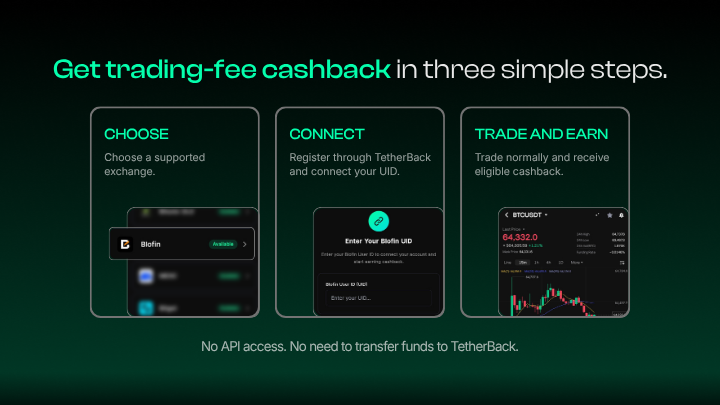
At TetherBack, we help qualifying traders recover part of eligible exchange commissions through supported partner arrangements. Users continue executing trades and holding trading funds with their exchanges; we do not need trading capital transferred to our platform.
Before assuming any advertised rebate applies, verify the registration source, supported product, current fee tier, payout terms and qualifying order types. Cashback cannot turn a losing trade into a risk-free transaction and should not encourage unnecessary volume.
How to check your eligibility and costs
- Check the current fee schedule inside your exchange account.
- Estimate maker and taker notional turnover for a representative month.
- Confirm cashback eligibility before using any referral offer.
- Register through an eligible partner link where required and follow UID-linking instructions.
- Track gross commissions, received cashback, funding and slippage separately.
- Keep an export of your trading history, calculate the commission paid on each fill and compare it with cashback actually credited. Reviewing these records monthly gives a more reliable view of net trading costs than relying on promotional figures alone.
Important limitations
Check whether the arrangement applies to futures, copy trading, automated orders or your particular account. Existing accounts registered through other links may not qualify.
A rebate percentage is not the price of a trade
We see traders compare cashback offers as though they were discount coupons on identical products. They are not. Each program sits on top of the exchange's own fee schedule, which may depend on VIP level, maker or taker execution, instrument and location. A 65% rebate on an expensive taker commission can still leave a larger bill than a 50% rebate on a cheaper commission. Our preferred comparison starts with the actual fee paid in dollars. It then asks how much of that fee is eligible and when the rebate is settled. A program becomes useful when the trader can answer those questions without guesswork. Cash returned several days later should also be recorded separately from the exchange's immediate deduction. Otherwise a dashboard may appear to show a lower trade cost than the account experienced at the time of execution.
Three ways traders confuse rewards with fee savings
First, a VIP fee tier is not the same thing as cashback. The VIP arrangement may reduce the charge at execution, whereas a rebate returns some qualifying commission afterward. Second, a deposit bonus can come with restricted use or withdrawal conditions; it should not be treated as equivalent to cash received from a fee rebate. Third, leaderboard prizes are uncertain. A participant may spend commissions and receive nothing if other entrants rank higher. We would track these items in separate parts of a trading report. Gross exchange commission, confirmed fee rebate, promotional credit and competition prize each answer a different accounting question. Combining them into a single 'savings' number makes it difficult to know which benefit is recurring and which was a one-time campaign.
What we check before calling an account eligible
We start with the exchange registration route. A partner program may require the account to be created through a specific link, and an existing account associated with someone else may not qualify. Next we check the products involved. Futures taker commissions, spot fees, copied trades and API orders do not necessarily receive the same treatment. Then we look at jurisdiction restrictions, trading pairs, maker orders and any excluded promotions. Finally we verify how the exchange attributes fees to the partner and how the cashback is credited or claimed. We want readers to be able to match the eligibility terms to their actual trading behavior. If a published offer cannot be reconciled with the account's circumstances, it should not be used in a forecast, regardless of how attractive its headline rate looks.

An example that puts payout size in perspective
Consider two traders at the same exchange. The first generates $40 in qualifying commissions during a month. The second generates $1,000. At a hypothetical 50% rebate, the first receives $20 and the second $500. That does not make the second trader more successful. Higher commissions may reflect larger notional positions, more frequent trading or more losses from overtrading. To judge whether a program helped, compare the fees that would have arisen from the same trades without the rebate. Do not count the cashback as market profit, and do not increase volume simply to raise the payout. In our view, the healthiest use of a rebate program is to recover part of the expenses from a trading plan that already makes sense before incentives.
Glossary
- Maker fee: Commission on an executed order that adds order-book liquidity.
- Taker fee: Commission on an executed order that removes existing liquidity.
- Notional volume: Monetary value of executed positions, not just deposited margin.
- Cashback: Return of part of an eligible commission under a referral arrangement.
- Funding rate: Periodic payment between long and short perpetual futures traders.
- Slippage: Difference between expected and realized trade execution prices.
Frequently Asked Questions
Is the highest cashback percentage always the best offer?
No. Compare the amount of fees charged first, then the eligible rebate percentage and the costs that cannot be refunded.
Is cashback trading profit?
No. Cashback is a partial refund of qualifying commission expenses. It does not guarantee a profitable trading result.
Are fees or cashback rates permanent?
No. Exchange schedules, account tiers and partnership offers may change. Always verify the latest terms before publication or trading.
How can I activate an eligible rebate?
Create a TetherBack account, use the official link for the selected exchange where required, then follow the UID and dashboard instructions.
Does a VIP fee discount work the same way as cashback?
No. VIP pricing can lower the fee charged at execution; cashback returns part of a qualifying commission through a separate process.
Can an ineligible account become eligible after it has traded?
Do not assume so. Referral attribution and exchange rules determine whether account changes or past fees qualify.
Conclusion
We recommend using the worked examples as a method rather than a promise. Verify current account fees, use your own trading history and reconcile actual cashback once credited. A lower eligible commission is useful, but it cannot remove trading risk.
About TetherBack
At TetherBack, we help eligible cryptocurrency traders recover part of qualifying trading fees through supported exchange partnerships. We publish practical fee comparisons and provide tools for estimating potential cashback. Traders keep control of their orders and funds on their selected exchanges. Eligibility, payout timing and product coverage depend on the relevant partner terms.