
TetherBack or Gemini Credit Card: Which Crypto Cashback Option Makes More Sense?
Crypto rewards can come from very different kinds of platforms.
Some reward you for trading. Others reward you for spending through a traditional credit card. That is why comparing TetherBack and the Gemini Credit Card is useful. Both sit in the broader crypto rewards space, but they are built for completely different user habits. TetherBack focuses on cashback tied to exchange trading activity, while the Gemini Credit Card focuses on earning crypto rewards from everyday card spending.
If your goal is to recover part of your trading costs while using supported exchanges, TetherBack is the stronger fit. If your goal is to earn crypto through dining, groceries, gas, transit, and other everyday purchases, the Gemini Credit Card is built for that use case.

What Is TetherBack?
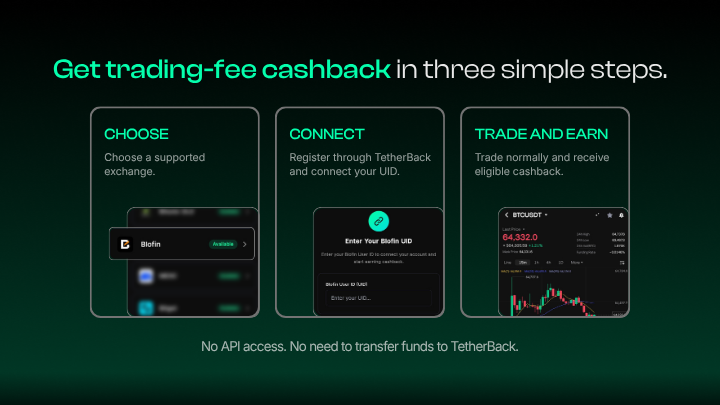
TetherBack is a crypto trading cashback platform that gives users access to USDT cashback based on trading activity on supported partner exchanges. It operates through UID linking rather than API integration, supports tracking across multiple exchanges in one dashboard, and allows cashback to be claimed daily.
That makes TetherBack especially relevant for active traders. Instead of attaching rewards to shopping or card transactions, it focuses on a real trading cost that users deal with regularly: exchange fees. For people who trade often, that creates a more direct and practical value proposition than a general consumer rewards product.
What Is the Gemini Credit Card?
The Gemini Credit Card is a crypto rewards credit card that offers up to 4% back on qualifying purchases, with 3% back on dining, 2% back on groceries, and 1% back on other eligible purchases. The 4% category applies up to $300 in spend per month, after which purchases in that category earn 1% for the rest of the month. Gemini also promotes instant rewards deposits, no annual fee, and no foreign transaction fees.
This makes the Gemini Credit Card much more consumer-spending focused than trader focused. Its core value is simple: use a familiar credit card format, make everyday purchases, and earn crypto back automatically. That makes it appealing for users who want exposure to crypto rewards without needing to trade on exchanges.
TetherBack vs Gemini Credit Card at a Glance
|
Feature |
TetherBack |
Gemini Credit Card |
|
Core use case |
Trading cashback |
Credit card crypto rewards |
|
Reward trigger |
Exchange trading activity |
Everyday card purchases |
|
Reward type |
USDT cashback |
Crypto rewards |
|
Main audience |
Crypto traders |
Everyday spenders |
|
Access model |
UID linking |
Credit card application and card spending |
|
API required |
No |
Not applicable |
|
Reward timing |
Daily claim model |
Instant reward deposits |
|
Platform focus |
Fee recovery for traders |
Consumer spending rewards |
|
Best for |
Active exchange users |
Users who want crypto rewards from purchases |
The biggest difference is simple. TetherBack helps traders recover value from exchange activity, while the Gemini Credit Card helps consumers earn crypto from regular spending.
Why TetherBack Stands Out
TetherBack stands out because it is built for a narrower but more targeted user need. It is designed for people who are already trading and want cashback tied to that behavior. Instead of rewarding general spending, it rewards a specific activity that matters directly to exchange users.
Its no-API setup is another clear advantage. TetherBack does not require API integration and does not need broader account permissions, which gives it a cleaner setup process for users who want cashback without adding complexity.
The multi-exchange dashboard is also important. TetherBack gives users access to trading and cashback data across multiple exchanges in one place, making it more relevant for active traders managing more than one account.

Where the Gemini Credit Card Performs Well
The Gemini Credit Card performs well in the everyday spending category. Its rewards structure is easy to understand, and its format is familiar to mainstream users. People can earn crypto through categories like dining, groceries, and transit without changing their financial habits too much.
It also has a straightforward consumer appeal because it combines crypto rewards with common credit card benefits. No annual fee and no foreign transaction fee strengthen its value for users who want a simple crypto rewards card rather than a specialized trading platform.
Another advantage is flexibility in rewards. Users can earn bitcoin or choose from a wide range of available crypto assets, and rewards are deposited instantly. That gives users more choice than a standard cashback card that only pays in fiat.
Pros and Cons of TetherBack
Pros
-
Built specifically for crypto traders
-
Cashback is tied directly to trading activity
-
Rewards are paid in USDT
-
No API integration required
-
Supports multiple exchange accounts in one dashboard
-
Daily claim structure matches active trading behavior
Cons
-
Less useful for users who do not trade actively
-
Depends on supported partner exchanges
-
More specialized than broad consumer rewards products
-
Not designed for everyday card spending
Pros and Cons of the Gemini Credit Card
Pros
-
Familiar credit card format
-
Earn up to 4% back in crypto on qualifying purchases
-
No annual fee
-
No foreign transaction fees
-
Rewards are instantly deposited
-
Supports bitcoin and a wide range of crypto reward options
Cons
-
Not designed to reduce trading costs
-
Highest reward tier is capped at $300 in spend per month
-
Base rewards on non-bonus categories are lower
-
Requires credit approval
-
More useful for spenders than active exchange traders
How TetherBack Is Different From the Gemini Credit Card
The difference comes down to where the rewards come from.
The Gemini Credit Card rewards everyday spending. TetherBack rewards crypto trading activity.
That means these two platforms are aimed at different behaviors. If someone trades regularly and wants to offset exchange-related costs, the Gemini Credit Card does not really solve that need because its rewards come from card purchases, not trading fees. If someone wants a crypto rewards credit card for daily spending, TetherBack is not trying to compete in that category.
For the TetherBack audience, the key point is relevance. TetherBack is directly connected to the trading journey, while the Gemini Credit Card is connected to consumer spending. That makes TetherBack the stronger choice for exchange-focused users.
How to Use TetherBack
Using TetherBack is straightforward.
First, create your account on TetherBack and choose a supported partner exchange. If you do not already have an account with that exchange, sign up through the official TetherBack partner link so the cashback tracking is set correctly.
Next, link your eligible exchange account using your UID. TetherBack does not require API integration, which keeps setup simpler and avoids the need to grant extra permissions.
Once your account is linked, you can monitor trading and cashback data across supported exchanges in one place through the TetherBack dashboard.
After that, you can claim your USDT cashback through the platform’s daily claim flow. For active traders, this means regular exchange activity can generate ongoing value instead of leaving fees as a one-way expense.
Which Platform Is Better?
For traders, TetherBack is the better fit.
That is because TetherBack is built around trading activity, exchange cashback, and practical fee recovery. Its structure is more relevant to active exchange users and more directly aligned with the needs of traders who want extra value from their trading volume.
For everyday spenders, the Gemini Credit Card is the better fit.
Its card-based rewards structure, familiar format, no annual fee, and instant crypto deposits make it more useful for users who want crypto rewards from purchases rather than trading activity.
So the answer is simple. TetherBack is better for traders. The Gemini Credit Card is better for spenders. If the audience is visiting the TetherBack website, the more relevant option is clearly TetherBack.
Final Verdict
The Gemini Credit Card is a strong consumer crypto rewards card. It offers a familiar spending experience, no annual fee, instant crypto rewards, and category-based cashback that can be appealing for daily use.
But it is not built for the same purpose as TetherBack.
TetherBack is the stronger platform for users who want cashback tied directly to crypto trading. Its UID-based setup, no-API model, multi-exchange dashboard, and daily cashback flow make it a much better fit for active traders who want to recover part of their trading costs.
If your priority is a crypto rewards credit card, the Gemini Credit Card makes sense. If your priority is trading cashback, TetherBack is the clear winner.
FAQ
Is the Gemini Credit Card a direct alternative to TetherBack?
Not really. The Gemini Credit Card is a consumer credit card that rewards spending, while TetherBack is a trading cashback platform focused on exchange activity. They both offer crypto-related rewards, but they are designed for different use cases.
Which platform is better for crypto traders?
TetherBack is the better choice for crypto traders because its reward model is tied directly to supported exchange trading activity.
Which platform is better for everyday spending rewards?
The Gemini Credit Card is better for everyday spending rewards because it is built around consumer purchases and category-based crypto rewards.
Does TetherBack require API integration?
No. TetherBack works through UID linking and does not require API integration.
Does the Gemini Credit Card have an annual fee?
No. The Gemini Credit Card does not have an annual fee.
Can users earn more than one type of crypto with the Gemini Credit Card?
Yes. Users can choose bitcoin or a wide range of available crypto assets for their rewards.
Can users use both TetherBack and the Gemini Credit Card?
Yes. Since they serve different purposes, some users may use TetherBack for trading cashback and the Gemini Credit Card for spending rewards.
Glossary
-
Crypto cashback: Rewards paid in cryptocurrency or tied to crypto-related activity.
-
Trading cashback: Cashback earned from exchange trading activity, usually connected to trading fees.
-
UID linking: Connecting an exchange account identifier to a cashback platform.
-
USDT: A stablecoin designed to track the U.S. dollar.
-
Credit card rewards: Incentives earned from eligible spending on a credit card.
-
Instant rewards deposit: A reward system where earned crypto is credited shortly after the transaction.
-
Partner exchange: An exchange that works with a cashback platform to support user rewards.
-
Dashboard: The user interface where account activity and cashback data can be monitored.
About TetherBack
TetherBack is a crypto cashback and rewards platform built for active traders who want to reduce effective trading costs. By partnering with supported exchanges, TetherBack shares a portion of trading fee revenue back to users in the form of cashback.
The platform does not hold user funds and does not operate as an exchange. Traders continue to execute trades directly on their chosen exchange while earning rewards through the partnership structure.
TetherBack focuses on cost efficiency, transparency, and providing traders with a structured way to maximize value from their existing trading activity.