
Crypto Futures vs Spot Trading: What’s the Difference for Beginners?
If you are new to crypto, one of the first questions you will probably run into is whether spot trading or futures trading makes more sense. At first, both can look similar because they both involve trying to profit from market movements. But in practice, they are very different products with different risks, different mechanics, and different learning curves.
The simplest way to understand crypto futures vs spot trading is this: in spot trading, you buy or sell the actual cryptocurrency at the current market price. In futures trading, you are trading a contract linked to the price of a cryptocurrency rather than directly buying and holding the asset itself. That basic difference affects everything else, from risk level to trading strategy to how beginners should approach the market.
For beginners, spot trading is usually easier to understand because the structure is straightforward. You buy a coin, you own it, and the value changes as the market price changes. Futures trading is more complex because it introduces concepts like leverage, margin, long and short positions, perpetual contracts, and liquidation. That does not mean futures are automatically bad. It means they require much more caution and much better understanding before you use them.

What Is Spot Trading in Crypto?
Spot trading means buying or selling a cryptocurrency for immediate settlement at the current market price, often called the spot price. If you buy Bitcoin on the spot market, you own Bitcoin. If you buy Ethereum on the spot market, you own Ethereum. The transaction is direct and the asset becomes part of your holdings. That ownership element is what makes spot trading easier for most beginners to understand.
In practical terms, spot trading works a lot like buying something normally. You pay the market price and receive the asset. If the price rises later, the value of what you own rises. If the price falls, the value of what you own falls. There is no futures contract involved, no funding rate, and usually no liquidation mechanism tied to leverage unless you are using separate margin features.
That is why spot trading is often recommended in beginner crypto education. It helps new users learn the basics of price movement, market orders, limit orders, volatility, and portfolio value without adding the more advanced risks that come with derivatives.
What Is Crypto Futures Trading?
Crypto futures trading is different because you are not necessarily buying the coin itself. Instead, you are opening a contract based on the price of that asset. If you trade a BTC futures contract, you are gaining exposure to Bitcoin’s price movement without directly owning Bitcoin in the same way you would on the spot market.
This structure allows traders to do things that are harder or less direct in spot markets. For example, futures traders can go long if they think the market will rise or go short if they think the market will fall. They can also use leverage, which means controlling a larger position with a smaller amount of capital. But that added flexibility also adds more risk.
Many crypto futures products today are perpetual futures, also called perpetual contracts or perps. These are futures-style contracts with no fixed expiration date. Instead of settling on a normal end date, they use a funding mechanism to keep the contract price close to the spot market price. That is one reason perpetual futures have become so dominant in crypto derivatives markets.
Spot vs Futures Crypto: The Core Difference
If you want the fastest explanation of spot vs futures crypto, it comes down to ownership versus price exposure.
With spot trading, you own the asset. With futures trading, you own a contract tied to the asset’s price movement. That one distinction changes how profits, losses, and risk work. In spot, your main concern is whether the asset price rises or falls after you buy it. In futures, your main concern includes price direction, leverage, margin, liquidation thresholds, and sometimes funding costs.
This is why futures vs spot crypto is not just a small technical difference. It is a difference in product design. Spot is simpler and more direct. Futures are more flexible but more complex. Beginners who do not fully understand this difference often underestimate how much faster losses can build in futures trading.

Ownership: Spot Gives You the Coin, Futures Gives You the Contract
Ownership is one of the easiest ways to compare crypto futures vs spot trading.
In spot trading, when you buy BTC, ETH, or another asset, you hold that asset. Its value moves with the market, and you can keep it as long as you want. In futures trading, you do not necessarily hold the underlying asset at all. You hold a contract whose value changes based on what the market does.
For beginners, this matters because owning the asset and trading a contract do not feel the same in practice. Spot trading is easier to understand emotionally and mechanically. Futures trading requires you to think in terms of position management, contract exposure, margin balance, and risk controls.
Market Direction: Spot Usually Benefits From Up Moves, Futures Can Trade Both Ways
Another major difference in spot vs futures crypto is how traders approach market direction.
In spot trading, the usual beginner approach is simple: buy low and hope to sell higher later. Your direct gains usually come from the asset increasing in price after you purchase it. In futures trading, traders can profit from both rising and falling markets by opening long or short positions.
That flexibility is one reason futures are attractive. But it can also create a false sense of confidence for beginners. Just because you can trade in both directions does not mean you should. The ability to short the market is powerful, but it still requires timing, risk control, and a strong understanding of how futures contracts behave.
Leverage: The Biggest Practical Difference
Leverage is one of the biggest reasons futures vs spot crypto feels so different.
In spot trading, you usually pay for the asset directly and your exposure is tied to the amount you buy. In futures trading, leverage can let you control a much larger position with a smaller amount of capital. That can increase profit if the market moves in your favor, but it also increases losses when the market moves against you.
For example, a trader with a relatively small balance may open a much larger futures position through leverage. This is one reason futures are often marketed as capital-efficient. But for beginners, leverage is usually the feature that creates the most damage because even a small market move can have a large impact on the position.
This is why a beginner crypto trading guide should always explain leverage honestly. It is not a shortcut to easy gains. It is amplified exposure. That amplification applies to losses just as much as profits.
Margin and Liquidation: Futures Adds Risks Spot Usually Does Not
Margin is the collateral used to support a leveraged futures position. If the market moves too far against your trade and your margin is no longer enough, the position may be forcibly closed. This is called liquidation. Spot trading generally does not expose beginners to the same kind of automatic forced-exit risk because they are simply holding the asset they bought.
This difference is huge. In the spot market, an asset can fall in value and you still keep holding it unless you decide to sell. In the futures market, a position can be closed for you if the losses become too large relative to your margin. That means a trader can be right about long-term market direction and still lose money because the position did not survive short-term volatility.
For beginners, this is one of the strongest arguments for learning spot first. Spot helps you understand price movement without immediately facing liquidation risk.
Cost Structure: Spot Fees vs Futures Fees and Funding
When comparing crypto futures vs spot trading, cost matters too.
Spot trading usually involves trading fees and possibly withdrawal fees, depending on the platform. Futures trading often includes trading fees as well, but can also include other costs such as funding payments for perpetual contracts. Funding is part of what keeps perpetual prices close to the spot market, and those payments can add to or reduce the cost of holding a futures position depending on market conditions.
This means active futures traders may face more moving parts in their cost structure than spot traders. Beginners sometimes focus only on whether a trade wins or loses, but repeated fees and funding can affect actual results over time.
Which Is Easier for Beginners?
For most beginners, spot trading is easier.
It is simpler to understand, easier to manage, and more direct because you are dealing with the actual asset rather than a leveraged contract. Many beginner guides still describe spot as the more suitable starting point because it helps new traders learn the basics without the additional complexity of derivatives.
That does not mean futures can never be learned by beginners. It means beginners should not treat spot and futures as equally simple. Futures require understanding not just price movement, but also position sizing, leverage, margin, liquidation, and funding.
A Simple Example: Spot vs Futures
Imagine Bitcoin is trading at $100,000.
In a spot trade, a beginner buys Bitcoin. If Bitcoin rises, the value of that holding rises. If Bitcoin falls, the value of the holding falls. The beginner still owns the Bitcoin unless they decide to sell it.
In a futures trade, the beginner opens a BTC contract instead. If they go long and the market rises, the contract may gain value. If the market falls, the contract loses value. If leverage is involved and the move against them is large enough, the position could be liquidated automatically. If they go short and the market falls, the contract may gain value instead.
That example shows why futures vs spot crypto is not just about two ways to trade the same asset. It is about two very different trading structures.
Pros and Cons for Beginners
Spot trading pros
-
Simpler to understand
-
You own the asset directly
-
No standard futures liquidation mechanism
-
Better for learning core market basics
Spot trading cons
-
Usually limited to benefiting from upward price moves unless using separate advanced tools
-
No leverage-based capital efficiency in a standard spot purchase
Futures trading pros
-
Ability to go long or short
-
Access to leverage
-
Greater flexibility for directional trading
Futures trading cons
-
More complex
-
Higher risk
-
Possible liquidation
-
Additional cost factors such as funding in perpetual contracts
How TetherBack Can Help Reduce Trading Fee Costs
Whether a beginner chooses spot trading or later explores futures, one practical issue stays the same: fees matter.
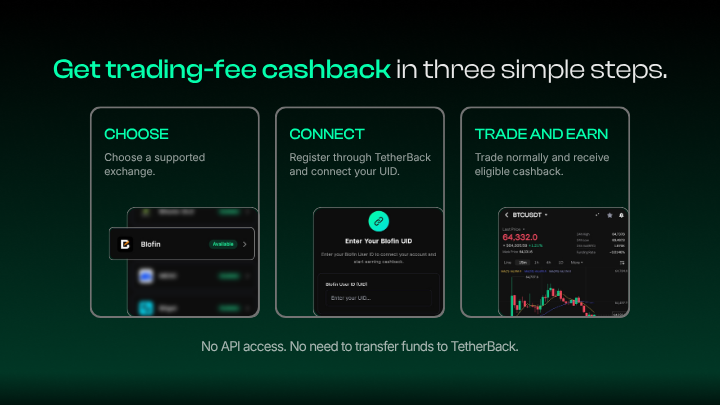
Trading costs can quietly build over time, especially for users who trade frequently. That is where TetherBack can help. Users start by signing up on TetherBack, choose a supported exchange through the TetherBack platform, register through that exchange link, and then connect their new UID back on TetherBack. When the process is completed correctly, eligible trading activity can generate cashback on fees.
For beginners comparing spot vs futures crypto, this matters because cost efficiency is part of building better trading habits. TetherBack does not change the risk difference between spot and futures, and it does not make leverage safer. But it can help reduce part of the effective fee burden for users who follow the correct setup process and trade on supported partner exchanges.
Glossary
-
Spot trading: Buying or selling the actual cryptocurrency at the current market price.
-
Spot price: The current market price of an asset for immediate purchase or sale.
-
Futures trading: Trading contracts based on the price of an underlying asset instead of buying the asset directly.
-
Perpetual futures: Futures-style contracts with no fixed expiration date.
-
Long position: A trade that benefits when the market price rises.
-
Short position: A trade that benefits when the market price falls.
-
Leverage: A tool that lets traders control a larger position with a smaller amount of capital.
-
Margin: The collateral used to open and maintain a leveraged futures position.
-
Liquidation: Forced closure of a position when losses become too large for the available margin.
-
Funding rate: A payment mechanism used in perpetual futures to help keep contract prices near the spot market.
-
Derivative: A contract whose value is based on an underlying asset.
-
UID: The account identifier used to connect an exchange account back to TetherBack.
FAQ
What is the difference between crypto futures and spot trading?
Spot trading means buying and owning the actual cryptocurrency. Futures trading means trading a contract linked to the cryptocurrency’s price movement instead of owning the coin directly.
Is spot trading safer than futures trading for beginners?
Spot trading is generally simpler and usually carries fewer structural risks than futures trading because it does not normally involve leverage, margin, or liquidation in the same way futures do.
Can you lose money faster in futures than in spot?
Yes. Futures trading can involve leverage, which magnifies both gains and losses. That means losses can build much faster than in standard spot trading.
Can beginners start with futures instead of spot?
They can, but futures are more advanced and riskier. Most beginner-focused educational resources still treat spot as the easier starting point.
Do you own Bitcoin or Ethereum in a futures trade?
Not in the same direct way as spot trading. In futures, you are usually trading a contract tied to the asset’s price rather than holding the asset itself.
Why do traders use futures instead of spot?
Some traders use futures because they can go long or short, use leverage, and gain exposure without directly buying the asset.
Does TetherBack work for both spot and futures traders?
TetherBack can help eligible users reduce part of their trading fee costs through cashback when they sign up correctly through TetherBack, use a supported exchange, and link their UID properly.
Conclusion
When comparing crypto futures vs spot trading, the biggest difference is simple: spot gives you the asset, while futures gives you a contract tied to the asset’s price. From there, everything else follows. Spot is more direct and easier for beginners to understand. Futures are more flexible, but they are also more complex and much riskier because they often involve leverage, margin, liquidation, and extra cost considerations like funding.
For most beginners, spot is the easier place to start. It builds a better foundation for understanding price movement and market behavior before moving into more advanced trading products. And whichever route a user takes, keeping trading costs under control still matters. TetherBack can help reduce part of the fee burden, which makes it a useful support tool for more cost-conscious traders.
About TetherBack
TetherBack is a crypto cashback and rewards platform built for active traders who want to reduce effective trading costs. By partnering with supported exchanges, TetherBack shares a portion of trading fee revenue back to users in the form of cashback.
The platform does not hold user funds and does not operate as an exchange. Traders continue to execute trades directly on their chosen exchange while earning rewards through the partnership structure.
TetherBack focuses on cost efficiency, transparency, and providing traders with a structured way to maximize value from their existing trading activity.