
Aivora Fees Explained: Maker Fees, Taker Fees, and How Cashback Reduces Trading Costs
Trading fees are one of the most important things to understand before using any crypto exchange.
Many traders focus only on price movement, market entries, or trading signals. However, fees can quietly affect trading results over time, especially for active traders who open and close positions often.
Aivora is a crypto exchange that offers access to spot and futures trading. Like many centralized exchanges, trading costs may depend on the type of order placed, the market used, and the user’s account level.
This guide explains how Aivora fees work, what maker and taker fees mean, why fees matter for crypto traders, and how TetherBack cashback can help reduce effective trading costs.
What Are Crypto Trading Fees?
Crypto trading fees are charges paid when a trader buys or sells cryptocurrency on an exchange.
These fees are usually calculated as a percentage of the trade amount. Even when the fee percentage looks small, it can become more noticeable when trading volume increases.
For example, a trader who places one small trade may not feel the cost much. However, a trader who places many trades every week may pay fees repeatedly.
This is why understanding trading fees is important before choosing an exchange.
Trading fees are not only a cost for beginners. They are also important for experienced traders, scalpers, futures traders, and anyone who trades regularly.
What Are Maker Fees?
A maker fee is charged when a trader places an order that adds liquidity to the order book.
This usually happens when a trader places a limit order that does not execute immediately.
For example, if Bitcoin is trading at 65,000 USDT and a trader places a limit buy order at 64,500 USDT, that order waits on the order book until the market reaches that price.
Because the order adds liquidity to the market, the trader is called a maker.
Maker fees are often lower than taker fees because exchanges usually encourage traders to add liquidity. More liquidity can help create a smoother trading environment with better order book depth.
What Are Taker Fees?
A taker fee is charged when a trader places an order that removes liquidity from the order book.
This usually happens when a trader uses a market order or an order that executes immediately against existing orders.
For example, if a trader buys Bitcoin instantly at the current market price, the order removes available liquidity from the order book. This makes the trader a taker.
Taker fees are often higher than maker fees because taker orders use existing liquidity for immediate execution.
For traders who value speed, taker orders can be useful. However, they may cost more than maker orders.
Maker Fees vs Taker Fees: Why the Difference Matters
The difference between maker and taker fees can affect total trading costs.
A trader who mainly uses limit orders may pay maker fees more often. A trader who mainly uses market orders may pay taker fees more often.
This matters because active traders may place many trades over time.
Even a small difference between maker and taker fees can become meaningful when trading volume increases.
For example:
A trader who places fewer trades may only notice fees occasionally.
A trader who uses short-term strategies may pay fees many times per day or week.
A futures trader may pay trading fees each time a position is opened or closed.
This is why understanding order types is part of cost control.
Aivora Fees: What Traders Should Know
Aivora has an official fee rate page where users can check trading fee information.
At the time of writing, Aivora’s fee structure includes VIP levels, which means trading fees may vary depending on account level, trading volume, or other exchange requirements.
This is common among crypto exchanges.
Some users may pay standard fees, while higher-level users may receive lower fee rates based on trading activity or account status.
Before trading, users should always check Aivora’s latest fee page directly. Fee structures can change, and rates may differ depending on whether the user is trading spot, futures, or using a specific account tier.
Aivora Fees on TetherBack
Aivora is available as a supported exchange on TetherBack.
At the time of writing, Aivora is listed on TetherBack with up to 70% cashback. The listed maker fee is 0.006%, while the listed taker fee is 0.042%.
These figures are useful because they show the relationship between trading fees and cashback.
The maker fee applies when a user adds liquidity to the market.
The taker fee applies when a user removes liquidity from the market.
Cashback helps return part of eligible trading fees to the user through TetherBack’s supported exchange structure.
However, users should always check the latest details on the TetherBack exchange page before registering because cashback rates, fee information, and campaign rules may change.
How Trading Fees Affect Active Traders
Trading fees are especially important for active traders.
An active trader may place many trades in a short period. This can include scalping, intraday trading, futures trading, or frequent position adjustments.
Each trade can create a fee.
Over time, those fees can reduce trading efficiency.
For example, a trader may have a strong strategy, but if trading costs are too high, the final result may be affected. This is why many active traders compare exchanges based on fees, execution, liquidity, cashback, and trading tools.
Cashback does not remove trading risk, but it can reduce part of the trading cost.
How Cashback Reduces Effective Trading Costs
Cashback works by returning part of eligible trading fees to the user.
This means the trader still pays trading fees on the exchange, but a portion of those fees may be returned through TetherBack if the account is eligible.
For example, if a trader pays trading fees while using Aivora, TetherBack cashback may return part of those fees based on the supported cashback rate.
This reduces the effective cost of trading.
It is important to understand what cashback does and does not do.
-
Cashback can help recover part of trading fees.
-
Cashback does not guarantee profit.
-
Cashback does not prevent losses.
-
Cashback does not remove liquidation risk.
-
Cashback does not replace a trading strategy.
It is a cost-reduction benefit, not a trading result guarantee.
Simple Example of Trading Fee Cashback
Here is a simple example.
Imagine a trader pays trading fees after opening and closing several positions.
If the account is eligible for cashback through TetherBack, part of those trading fees may be returned to the trader.
If the listed cashback rate is up to 70%, the cashback applies to eligible trading fees, not to total trading volume or trading profit.
This is an important difference.
A 70% cashback rate does not mean a trader receives 70% of their trade size.
It means the trader may receive cashback based on eligible fees generated from trading activity.
This is why cashback is best understood as fee recovery.
Why Fees Matter More in Futures Trading
Futures trading can create more frequent fees because traders may open and close positions often.
A futures trader may also adjust positions, use leverage, or trade during short-term market movements.
Every opening and closing action may involve trading fees.
For this reason, futures traders often pay close attention to maker fees, taker fees, funding fees, and cashback opportunities.
However, futures trading also carries higher risk.
Leverage can increase both gains and losses. If a position moves against the trader, liquidation may occur. Cashback cannot protect a trader from liquidation or market losses.
This is why futures traders should focus on both cost control and risk management.
How to Reduce Aivora Trading Costs
There are several ways traders may reduce their effective trading costs.
First, understand the fee structure before trading. Traders should know whether they are paying maker fees or taker fees.
Second, use limit orders when suitable. Limit orders may qualify as maker orders if they add liquidity to the order book.
Third, avoid unnecessary trading. Overtrading can increase fees and risk.
Fourth, check whether the account qualifies for lower fees through Aivora’s VIP structure.
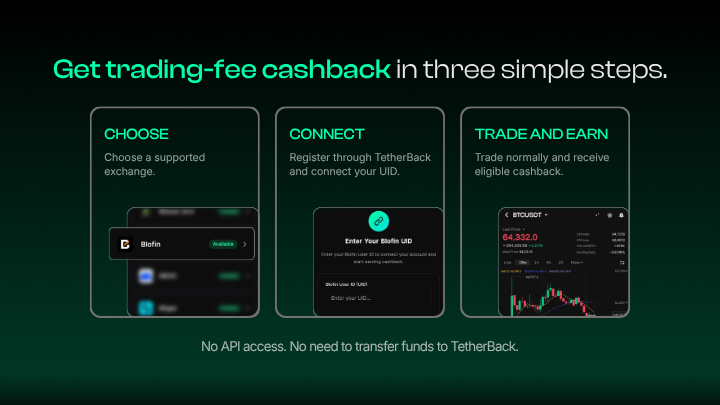
Fifth, activate cashback through TetherBack before creating an Aivora account.
This final step is important because cashback eligibility usually depends on registering through the correct referral link.
Why Registration Flow Matters
To receive Aivora cashback through TetherBack, users usually need to register through the official TetherBack activation link.
If a user creates an Aivora account directly or through another referral source, the account may not be connected to TetherBack.
This can make the account ineligible for cashback.
That is why users should activate cashback before signing up for Aivora.
The correct process is simple:
-
Create or log in to a TetherBack account.
-
Find Aivora on the supported exchange page.
-
Click the official activation link.
-
Register on Aivora through that link.
-
Complete the required exchange steps.
-
Trade directly on Aivora.
-
Track eligible cashback through TetherBack.
Common Fee Mistakes Traders Should Avoid
One common mistake is ignoring fees completely.
Some traders only focus on price movement and forget that every trade can carry a cost.
Another mistake is using market orders too often without understanding taker fees.
Market orders can be useful for fast execution, but they may cost more than maker orders.
A third mistake is overtrading just to generate cashback.
Cashback should reduce the cost of trading activity that already makes sense. It should not become the reason to trade more than necessary.
A fourth mistake is assuming cashback equals profit.
Cashback is based on eligible trading fees. It is not based on trading performance.
Is Aivora Cashback Worth It?
Aivora cashback may be useful for traders who already plan to use Aivora and want to reduce effective trading costs.
It may be especially useful for:
-
Active traders who place trades regularly.
-
Futures traders who generate frequent trading fees.
-
Spot traders who want to recover part of their fee cost.
-
Users comparing cashback-supported exchanges.
-
Traders who care about long-term cost efficiency.
However, cashback should not be the only reason to choose an exchange.
Users should also review security, supported markets, liquidity, customer support, withdrawal rules, KYC requirements, and platform usability.
FAQ
What are Aivora fees?
Aivora fees are trading costs charged when users buy, sell, or trade crypto on the platform. Fees may vary depending on order type, market type, and account level.
What is a maker fee?
A maker fee is charged when a trader places an order that adds liquidity to the order book, usually through a limit order that does not execute immediately.
What is a taker fee?
A taker fee is charged when a trader places an order that removes liquidity from the order book, usually through a market order or instantly matched order.
Why are taker fees usually higher than maker fees?
Taker fees are often higher because taker orders remove existing liquidity from the market, while maker orders add liquidity.
What Aivora fees are listed on TetherBack?
At the time of writing, Aivora is listed on TetherBack with a 0.006% maker fee and a 0.042% taker fee. Users should always check the latest details before registering.
How much cashback is available for Aivora?
At the time of writing, Aivora is listed on TetherBack with up to 70% cashback.
Does cashback remove trading fees completely?
No. Cashback returns part of eligible trading fees, but it does not remove trading costs completely unless stated under specific campaign terms.
Is cashback based on trading profit?
No. Cashback is based on eligible trading fees, not trading profit or loss.
Can existing Aivora users get cashback?
Existing users may not qualify if their account was not created through the official TetherBack activation link. Users should check the official instructions or contact support for clarification.
Conclusion
Aivora fees are an important part of understanding the total cost of trading on the platform.
Maker fees and taker fees work differently, and the type of order a trader uses can affect the final cost. Active traders, especially futures traders, should pay close attention to these fees because repeated trading activity can make small percentages add up over time.
Through TetherBack, eligible users can reduce effective trading costs by receiving cashback on supported exchanges, including Aivora.
Cashback does not guarantee profit or remove risk. It simply helps return part of eligible trading fees.
For traders who already plan to trade on Aivora, activating cashback through TetherBack before registration can be a practical way to make trading costs more efficient.
About TetherBack
TetherBack is a crypto cashback and rewards platform built for active traders who want to reduce effective trading costs. By partnering with supported exchanges, TetherBack shares a portion of trading fee revenue back to users in the form of cashback.
The platform does not hold user funds and does not operate as an exchange. Traders continue to execute trades directly on their chosen exchange while earning rewards through the partnership structure.
TetherBack focuses on cost efficiency, transparency, and providing traders with a structured way to maximize value from their existing trading activity.