
How to Track Your Crypto Trading Fee Costs More Accurately
A lot of traders think they have a good sense of their trading costs.
They know fees exist. They know every trade comes with a cost. But when it comes to the actual numbers, many traders are only guessing. They remember a percentage, but they do not really track what that percentage adds up to over time.
That is where problems start.
If you are not tracking your trading fee costs accurately, it becomes much harder to understand your real performance, compare exchanges properly, or judge how useful cashback really is.
Why Fee Tracking Matters More Than Most Traders Think
Fees are one of the most consistent costs in trading.
They appear whether your trade is profitable or not. That means they affect your results in the background all the time, not just when the market moves against you.
A lot of traders focus only on outcomes. They look at whether they made money or lost money. But that is not enough if you want a clear picture of performance.
Tracking fees accurately helps you understand what you are really keeping after costs, not just what your trades look like before those costs are included.
That is the difference between feeling active and actually understanding your trading.
Percentages Are Easy to Ignore, Totals Are Not
One reason traders underestimate fees is because percentages look small.
A fraction of a percent does not feel important when you look at one trade. But repeated trading changes the meaning of that number. What seems small at the start can become a meaningful cost when it is repeated across dozens or hundreds of trades.
This is why tracking totals is so important.
Once you stop thinking only in percentages and start thinking in total fee cost over a week or a month, the impact becomes much easier to understand. It also becomes much easier to see why fee awareness matters so much.
Track Fees as Part of Net Performance
A smart way to track costs is to make fees part of how you evaluate your results.
Instead of looking only at profit or loss, look at what remains after fees. That gives you a more realistic view of performance.
This matters because some trades may still look good before costs but feel much less impressive once fees are factored in. If you are not reviewing your net result, you are not really seeing the full picture.
The traders who stay sharp over time usually understand this. They do not just ask whether a trade worked. They ask whether it was worth taking after the costs were included.
Compare Fee Structures Before You Commit
Fee tracking does not only help after you trade. It also helps before you decide where to trade.
A lot of traders compare exchanges too casually. They focus on one number, usually the cashback rate, and ignore the rest. But tracking fees properly starts with understanding what each exchange may actually cost you.
That means looking at cashback rate, maker fee, and taker fee together.
A stronger fee structure can make a meaningful difference over time, especially for traders who are active and generate steady volume.
A Simple Comparison Table Makes Cost Tracking Easier
One of the easiest ways to make fee tracking more practical is to compare exchange fee structures.
|
Exchange |
Cashback Rate |
Maker Fee |
Taker Fee |
What Stands Out |
|
WEEX |
65.00% |
0.01% |
0.03% |
Highest cashback rate and lowest maker fee |
|
Bitunix |
60.00% |
0.01% |
0.02% |
Lowest taker fee |
|
Bitget |
50.00% |
0.01% |
0.03% |
Highest maker fee and highest taker fee |
|
BingX |
50.00% |
0.01% |
0.03% |
Lower taker fee than Bitget and Blofin |
|
Blofin |
50.00% |
0.01% |
0.03% |
Highest maker fee and highest taker fee |
This kind of comparison helps because it shows that fees are not the same everywhere. WEEX stands out for the highest cashback rate and the lowest maker fee. Bitunix stands out for the lowest taker fee. Bitget and Blofin sit at the highest fee level on both maker and taker.
When you can see these differences clearly, it becomes easier to track what your chosen setup may be costing you over time.
Use a Calculator to Make Your Estimates More Practical
A calculator makes fee tracking much easier because it turns rough assumptions into something more useful.
Instead of guessing how much your trading fees might add up to, a calculator helps you estimate the effect based on your own activity. That makes the process much more practical.
It also helps you understand what cashback may reduce over time. If you know what your fee cost looks like, it becomes much easier to judge the actual value of cashback instead of treating it like a random extra.
This keeps your expectations more realistic and your comparisons more accurate.
Review Your Costs Regularly, Not Just Once
Fee tracking should not be a one-time habit.
If you only think about costs when you first choose an exchange, you miss what happens over time. Trading volume changes, habits change, and even your execution style can shift without you noticing.
That is why regular review matters.
A trader who checks fee impact consistently is more likely to stay aware of where value is being kept and where it is being lost. That kind of awareness leads to better long-term decisions.
Accurate Tracking Helps You Use Cashback Better
Cashback becomes more useful when you understand what it is actually reducing.
If you do not know your fee costs, cashback may feel like a vague bonus. If you do know your fee costs, cashback becomes easier to understand as a real cost-reduction tool.
That change in perspective matters.
It helps you judge whether your current setup is efficient, whether a different exchange may fit better, and whether a campaign is worth paying attention to. In short, accurate fee tracking makes cashback easier to use intelligently.
Conclusion
Tracking your trading fee costs more accurately is not complicated, but it does require more attention than most traders give it.
Once you stop relying on rough guesses and start thinking in real cost, your decision-making improves. You understand your net performance more clearly, compare exchanges more intelligently, and see cashback for what it really is: a way to reduce trading costs over time.
That is why accurate fee tracking matters. It gives you a clearer picture of what your trading is actually costing you and what you are really keeping.
FAQ
Why is it important to track trading fees accurately?
Because fees affect every trade, and without tracking them properly, it is hard to understand your real performance.
Should I track fees as percentages or totals?
Both matter, but total fee cost over time is usually much easier to understand in practical terms.
How does accurate fee tracking help with cashback?
It helps you understand cashback as a real reduction in trading cost instead of treating it like a random bonus.
How often should I review my trading fee costs?
Regularly. Fee tracking is most useful when it becomes part of your ongoing trading review.
About TetherBack
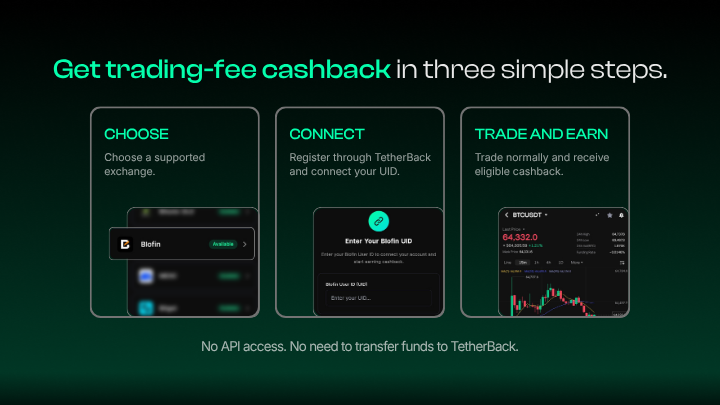
TetherBack is a crypto cashback and rewards platform built for active traders who want to reduce effective trading costs. By partnering with supported exchanges, TetherBack shares a portion of trading fee revenue back to users in the form of cashback.
The platform does not hold user funds and does not operate as an exchange. Traders continue to execute trades directly on their chosen exchange while earning rewards through the partnership structure.
TetherBack focuses on cost efficiency, transparency, and providing traders with a structured way to maximize value from their existing trading activity.