
What Is Crypto Futures Trading? A Beginner’s Guide to How It Works
Crypto futures trading is one of the most talked-about parts of the digital asset market, but for beginners it can feel confusing at first. Terms like leverage, margin, liquidation, perpetual contracts, and funding rates make it sound more complicated than it needs to be.
In simple language, crypto futures trading lets you speculate on whether the price of a cryptocurrency will go up or down without actually owning the coin itself. Instead of buying Bitcoin, Ethereum, or another asset in the spot market and holding it in your wallet, you open a contract based on that asset’s price. This is one reason futures have become such a major part of the crypto market.
For beginners, the most important thing to understand is that crypto futures can amplify both gains and losses. They are not the same as simply buying a coin and waiting. Futures trading is more complex, more fast-moving, and much riskier when leverage is involved. That is why a proper beginner’s guide should focus on understanding how crypto futures work before thinking about potential profit.

What Is Crypto Futures Trading?
Crypto futures trading is the buying and selling of futures contracts tied to the price of a cryptocurrency. A futures contract is an agreement connected to an underlying asset, such as Bitcoin or Ethereum, where traders gain exposure to price movement without directly holding the asset itself. In traditional futures markets, contracts usually have expiration dates. In crypto, perpetual futures are especially popular because they let traders keep positions open without a standard expiry, as long as they continue meeting margin requirements.
So, what is crypto futures trading in everyday terms? It is a way to trade price direction. If you believe the market will rise, you can open a long position. If you believe the market will fall, you can open a short position. Your profit or loss depends on whether the market moves in the direction you expected.
This is different from spot trading. In spot trading, you buy the actual cryptocurrency and own it. In futures trading, you are trading a contract that tracks the asset’s price. That makes futures useful for speculation and, in some cases, for hedging risk. It also makes them more complex for beginners because price exposure, leverage, and account management all play a much bigger role.
How Crypto Futures Work
To understand how crypto futures work, think of the contract as a price-based position rather than a coin purchase.
Let’s say Bitcoin is trading at $100,000. You believe the price will go higher, so you open a long futures position. If Bitcoin rises to $102,000 and your contract gains value, you may close the trade for a profit. If it falls instead, your position loses value. The reverse is true for a short position. If you short Bitcoin and the price falls, you may profit. If the price rises, you may lose money.
In crypto futures for beginners, there are four core ideas to learn first:
Long and short positions
A long position means you expect the price to rise. A short position means you expect the price to fall. Futures markets make it easier to trade both directions because you are not limited to buying first and selling later.
Margin
Margin is the collateral you put up to open and maintain a futures position. You do not always need to commit the full value of the position yourself because many futures products allow leveraged exposure.
Leverage
Leverage lets you control a larger position with a smaller amount of capital. For example, with 10x leverage, a $100 margin deposit can control a $1,000 position. This increases upside potential, but it also increases downside risk because even a relatively small market move against you can create a large percentage loss on your margin.
Profit and loss
Your result depends on the difference between your entry price and exit price, the position size, and the amount of leverage used. A correct market call can generate a gain, but a wrong call can lead to fast losses.
What Are Perpetual Futures?
Perpetual futures, often called perpetual contracts or perps, are a type of futures contract with no fixed expiration date. They are one of the most widely used instruments in crypto derivatives trading. Instead of settling on a standard monthly or quarterly expiry like many traditional futures contracts, perpetual futures can stay open indefinitely, provided the trader maintains enough margin.
This structure is a major reason they are so popular in crypto. Traders can open positions based on short-term or medium-term market views without needing to roll a contract into a later expiry. However, perpetual contracts often use a funding mechanism to help keep their market price close to the underlying spot price.
For beginners, the simplest takeaway is this: perpetual futures are designed to track crypto price movements without requiring you to own the asset, and they do so through a contract that has no normal end date.

Leverage in Crypto Futures Trading
Leverage is one of the main reasons people are drawn to crypto futures trading, and also one of the main reasons beginners get into trouble.
With leverage, you can open a larger position than your cash balance would normally allow. This makes futures more capital-efficient, but it also means losses can happen much faster. A move of just a few percentage points can have a major effect on a leveraged position.
For example, imagine you open a position worth $1,000 using $100 of your own capital with 10x leverage. If the market rises 5% in your favor, the gain on your position is magnified relative to your margin. But if the market moves 5% against you, the loss is magnified too. In real trading, fees, funding, and volatility can make outcomes even harsher than beginners expect.
This is why crypto futures for beginners should never be explained as a shortcut to easy profit. Leverage is a tool, not an advantage by itself. Used carelessly, it can empty an account quickly.
What Is Liquidation?
Liquidation happens when your position can no longer meet the exchange’s margin requirements, so the position is automatically closed to prevent further losses.
This is one of the most important concepts in learning how crypto futures work. In the spot market, a coin can fall in price and you still continue holding it unless you sell. In futures, especially when leverage is involved, a position can be closed automatically before the market has any chance to recover in your favor.
For beginners, liquidation is the line between normal market fluctuation and forced exit. The more leverage you use, the smaller the margin for error. That is why risk management matters so much in futures trading.
Funding Rates and Why They Matter
Because perpetual futures do not expire like traditional futures contracts, many platforms use funding payments to help keep the perpetual price close to the spot price. These payments usually move between long and short traders depending on market conditions.
When the perpetual contract trades above the spot market, funding may favor payments from longs to shorts. When it trades below spot, funding may favor payments from shorts to longs. The exact formula can vary by platform, but the general purpose is the same: to reduce the gap between perpetual and spot pricing.
Beginners often focus only on entry and exit price, but funding can affect the total cost of holding a position over time. This becomes especially relevant if you keep trades open longer rather than closing them quickly.
Crypto Futures vs Spot Trading
A simple way to explain crypto futures vs spot trading is this:
In spot trading, you buy or sell the actual cryptocurrency. If you buy BTC in the spot market, you own BTC. In futures trading, you do not necessarily own the coin. You hold a contract linked to its price movement instead.
Spot trading is generally easier for beginners to understand because it is more direct. You buy the asset, you hold it, and your gains or losses depend on the market price. Futures trading adds more layers, including leverage, margin, liquidation, and funding rates.
That does not mean futures are automatically bad. It means they are more advanced and require stronger discipline. A beginner should first understand the mechanics clearly before treating futures as part of a trading plan.
Why Traders Use Crypto Futures
There are several reasons traders use crypto futures.
The first is speculation. Traders may want exposure to price movements without buying and storing the actual cryptocurrency. The second is directional flexibility. Futures allow traders to go long or short more easily. The third is capital efficiency, since leverage can increase exposure while using less upfront capital than buying the full position outright. In broader futures markets, contracts are also used for hedging, which means reducing exposure to price risk.
Still, what attracts traders can also create risk. Ease of access to leverage and short-selling makes futures powerful, but also dangerous when beginners rush in without understanding the mechanics.
Common Risks Beginners Should Understand
Every beginner guide on crypto futures trading should be honest about the risks.
The first risk is volatility. Crypto prices can move quickly, and leveraged contracts magnify the impact of those moves. The second risk is liquidation, where a position is forcibly closed because margin requirements are no longer met. The third is cost friction, which can include trading fees and funding payments. The fourth is complexity. A trader can be right about long-term direction but still lose because position sizing, timing, leverage, or funding works against them.
Another major issue is emotional decision-making. New traders often overtrade, increase leverage too early, or hold losing positions longer than planned. While this is not unique to crypto, the speed of crypto markets can make those mistakes more expensive. That is why simple education matters much more than hype.
A Simple Example of How Crypto Futures Work
Imagine a trader expects Ethereum to rise in price. Instead of buying ETH in the spot market, they open a long ETH perpetual futures position. They post margin, choose a position size, and the contract moves in value as ETH’s market price changes. If ETH rises and they close at a higher price, they may profit. If ETH falls, they may lose money. If losses grow too large relative to their margin, the position may be liquidated automatically.
Now imagine the opposite case. A trader expects ETH to fall, so they open a short futures position. If ETH drops, the contract can gain value. If ETH rises, the short loses value instead. This ability to trade both directions is one of the defining features of futures markets.
For a beginner, this is the heart of the answer to how crypto futures work: you are opening a price-based contract, managing margin and leverage, and trying to profit from the direction of the market without directly owning the asset.
What Beginners Should Learn Before Using Crypto Futures
Before using crypto futures, beginners should understand five things clearly.
First, know the difference between spot and futures. Second, understand how long and short positions work. Third, learn what leverage does to both gains and losses. Fourth, know how margin and liquidation affect your trade. Fifth, pay attention to fees and funding because costs matter over time.
Beginners should also remember that futures products are not available everywhere and that access can depend on local regulations, exchange policies, and account requirements.
Basic Tips for Crypto Futures Beginners
If you are new to crypto futures trading, it is smart to keep your approach simple.
Start with small positions. Do not rush into large trades just because leverage is available. Just because a platform offers high leverage does not mean you need to use it.
Use stop-loss planning. Even if your exchange tools vary, the habit of deciding your exit before opening a trade is important. This can help reduce emotional decision-making.
Focus on one or two trading pairs first. Beginners often make the mistake of jumping between many volatile markets at once. It is easier to learn when you follow fewer assets closely.
Understand the fee structure. Trading fees, funding rates, and other costs can affect your actual results more than you expect, especially if you trade frequently.
Most importantly, do not treat futures as gambling. A beginner who learns discipline early has a much better chance of building good habits over time.
How TetherBack Can Help Reduce Crypto Futures Fees
Once a beginner understands the basics of crypto futures trading, the next practical question is cost. Even when a trader is careful about leverage and risk, trading fees still matter. Over time, those costs can add up, especially for futures traders who open and close positions regularly.
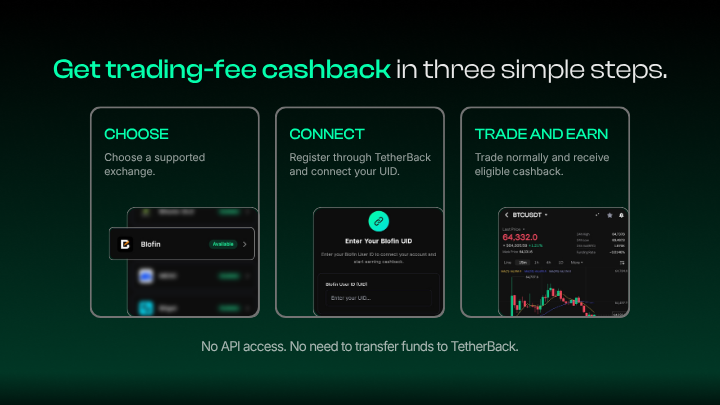
This is where TetherBack can help. Instead of simply creating an exchange account on your own, users start by signing up on TetherBack, choose their preferred exchange through the TetherBack platform, register through that exchange link, and then connect their new UID back on TetherBack. When the account is linked correctly, eligible trading activity can generate cashback on fees. This creates a way for users to lower part of their effective trading cost over time.
For crypto futures traders, that matters because fee efficiency is part of long-term discipline. A beginner may spend a lot of time learning about leverage, liquidation, and market direction, but forget that repeated fees can quietly affect results. Reducing fee drag does not remove risk, and it does not guarantee profit, but it can make the overall trading experience more cost-efficient when used correctly.
In simple terms, TetherBack is most useful as a support layer around your trading activity. It does not change how futures contracts work, and it does not make risky trading safe. What it can do is help reduce part of the fee burden for users who sign up properly through its process and trade on supported partner exchanges.
Glossary
-
Crypto futures trading: Trading futures contracts based on the price of cryptocurrencies rather than buying the coins directly.
-
Futures contract: A contract whose value is tied to an underlying asset, such as Bitcoin or Ethereum.
-
Perpetual futures: A type of crypto futures contract with no fixed expiration date.
-
Spot trading: Buying or selling the actual cryptocurrency in the market for direct ownership.
-
Long position: A trade opened with the expectation that the asset price will rise.
-
Short position: A trade opened with the expectation that the asset price will fall.
-
Margin: The collateral required to open and maintain a futures trade.
-
Leverage: A tool that lets traders control a larger position with a smaller amount of capital.
-
Liquidation: The forced closure of a position when margin requirements are no longer met.
-
Funding rate: A payment mechanism used in perpetual futures to help keep contract prices close to the spot market.
-
Position size: The total value of the trade a trader opens in the futures market.
-
Volatility: The speed and size of price movement in the market.
-
Hedging: Using a financial position to reduce risk from price changes in another holding or exposure.
-
Fee drag: The negative effect that repeated trading fees can have on overall returns over time.
-
UID: A user identification number or account identifier used to link an exchange account back to TetherBack.
FAQ
Is crypto futures trading good for beginners?
Crypto futures trading can be learned by beginners, but it is more advanced than spot trading. It involves leverage, margin, and liquidation risk, so beginners should understand the basics fully before trading.
What is the main difference between crypto futures and spot trading?
In spot trading, you buy and own the actual cryptocurrency. In futures trading, you trade a contract linked to the asset’s price movement instead of holding the coin itself.
Can you lose more money in crypto futures trading?
Yes. Because leverage is often involved, losses can happen much faster than in spot trading. A position can also be liquidated if the market moves too far against you.
What does long and short mean in crypto futures?
A long position means you expect the price to go up. A short position means you expect the price to go down.
What are perpetual futures in crypto?
Perpetual futures are futures contracts without a fixed expiration date. They are very popular in crypto trading because traders can keep positions open as long as margin requirements are met.
Why do funding rates matter?
Funding rates can add to the cost of holding a position or provide payments depending on market conditions. They matter most when a trader keeps a perpetual futures position open for a longer period.
Is leverage necessary in crypto futures trading?
No. Leverage is available on many platforms, but using high leverage is not required. Beginners are generally safer when they focus on understanding the market first instead of chasing larger exposure.
How can TetherBack help futures traders?
TetherBack can help eligible users reduce part of their trading fee costs through cashback when they sign up through the correct TetherBack process, use a supported exchange, and link their UID properly.
Conclusion
Crypto futures trading allows traders to speculate on the price of cryptocurrencies through contracts rather than direct coin ownership. For beginners, the core ideas are straightforward once the jargon is removed: you can trade price direction, open long or short positions, use margin, and sometimes apply leverage. But the same features that make futures attractive also make them risky. Leverage can magnify outcomes, liquidation can happen quickly, and costs like fees and funding can affect results.
The best way to approach crypto futures for beginners is not with excitement first, but with clarity first. Learn what crypto futures trading is, understand how crypto futures work, know the difference between futures and spot, and pay close attention to risk before focusing on opportunity. And once you do begin trading, thinking about efficiency matters too. Platform like TetherBack can help reduce part of the fee burden, which is useful for traders who want a more cost-conscious approach while learning the market.
About TetherBack
TetherBack is a crypto cashback and rewards platform built for active traders who want to reduce effective trading costs. By partnering with supported exchanges, TetherBack shares a portion of trading fee revenue back to users in the form of cashback.
The platform does not hold user funds and does not operate as an exchange. Traders continue to execute trades directly on their chosen exchange while earning rewards through the partnership structure.
TetherBack focuses on cost efficiency, transparency, and providing traders with a structured way to maximize value from their existing trading activity.