
Margin, Liquidation, and Funding Rates in Crypto Futures Explained Simply
If you are new to crypto futures, three of the most important terms to understand are margin, liquidation, and funding rates. These are the mechanics that make futures trading very different from simple spot trading. Spot trading is mostly about buying and holding the asset itself. Futures trading adds contract exposure, leverage, margin requirements, and in the case of perpetual futures, funding payments between traders.
For beginners, this is where confusion usually starts. Many people see a futures platform and think the main job is only to decide whether the market will go up or down. But that is only part of the picture. In crypto futures, you also need to know how much collateral is required to open a trade, how much must remain in the account to keep the trade alive, what happens if the market moves too far against you, and why you may pay or receive funding while holding a perpetual position.
The good news is that these concepts are much easier once they are explained in plain language. Margin is the collateral behind your trade. Liquidation is what happens when your position no longer meets the required margin. Funding rates are periodic payments between longs and shorts in perpetual futures, designed to help keep the contract price close to the spot price.

What Is Crypto Futures Margin?
Crypto futures margin is the money or collateral required to open and maintain a futures position. It is not the same as buying the asset outright.
In simple terms, margin is the financial cushion supporting your trade. If you open a leveraged BTC or ETH futures position, the platform needs to know there is enough collateral in your account to absorb losses if the market moves against you. That is why margin is central to leveraged trading.
This is also why beginners should not think of margin as spare balance. Once used for a futures trade, margin is part of the position’s risk structure. If losses increase, that margin can shrink quickly.
Initial Margin vs Maintenance Margin
One of the most important beginner questions is the difference between initial margin vs maintenance margin.
Initial margin is the amount of capital required to open a futures position.
Maintenance margin is the minimum amount of margin required to keep that position open after it has already been opened.
So in plain language:
-
Initial margin gets you into the trade.
-
Maintenance margin keeps you in the trade.
That distinction matters a lot because beginners sometimes focus only on opening the position and forget that the account must continue meeting maintenance requirements as the market moves.
A Simple Margin Example
Imagine a trader wants to open a crypto futures position worth $1,000.
If the platform requires 20% initial margin, the trader would need $200 to open that trade. That $200 acts as the collateral supporting the $1,000 exposure.
Now imagine the market moves against the trader. The position starts losing value, and that loss starts eating into the available margin. If the remaining margin falls below the required maintenance level, the position is at risk of liquidation.
For beginners, this example shows why crypto futures margin is not just an opening requirement. It is part of the ongoing survival of the position.
What Is Liquidation in Crypto Futures?
Liquidation in crypto futures happens when a position no longer meets the required maintenance margin. At that point, the platform closes the position automatically to prevent further losses.
In simple language, liquidation means the trade is forced shut because there is no longer enough margin to support it.
This is one of the biggest differences between spot trading and futures trading. In spot, if you buy an asset and the price falls, you usually keep holding it unless you choose to sell. In futures, especially when leverage is involved, the trade can be closed automatically before the market ever has a chance to recover.
That is why liquidation in crypto futures is one of the main risks beginners need to understand before they trade.
Why Liquidation Happens Faster With Leverage
Leverage makes liquidation risk much more serious because it increases position size relative to margin. The higher the leverage, the less room the trade has to move against you before your margin falls below the required level.
This means a relatively small price move can become a major account event when leverage is high.
For beginners, the practical lesson is simple: leverage reduces your margin for error.
What Are Funding Rates?
Funding rates are one of the key features of perpetual futures, which are futures contracts without a fixed expiration date.
Because they do not expire like traditional futures, they use funding payments to help keep the contract price aligned with the spot market.
In simple terms, funding is a balancing mechanism for perpetual futures.
Funding Rate Explained Simply
A beginner-friendly way to understand funding rate explained is this:
If the perpetual futures price is trading above the spot market, funding is often positive. In that case, long traders usually pay short traders. If the perpetual price is trading below spot, funding may turn negative, and short traders may pay long traders instead.
So funding is not usually a fee charged by the exchange in the same way as a trading fee. It is usually a payment exchanged between traders holding opposite positions.
For beginners, the key takeaway is that funding affects the cost of holding a perpetual futures trade over time. Even if your trade direction is correct, funding payments can still influence your actual result.
Why Funding Rates Matter
Funding rates matter because many beginners focus only on entry price and exit price. But in perpetual futures, the trade can also have an ongoing cost or payment flow depending on the funding environment.
If you are in and out quickly, funding may matter less. But if you hold a position longer, repeated funding intervals can affect your net performance.
That is why funding is not just a technical detail. It is part of the real cost structure of perpetual futures.
How Margin, Liquidation, and Funding Connect
These three ideas are connected.
Margin is what supports your futures position. Maintenance margin is the minimum required to keep it alive. If losses reduce your available margin too far, liquidation can happen. If you are trading perpetual futures, funding rates can also affect the economics of holding the position over time.
So beginners should not think of these as separate topics. They work together inside the same trade structure:
-
Margin controls your trade support.
-
Liquidation is the forced outcome if support falls too low.
-
Funding affects the cost of keeping the position open in perpetual futures.

Common Beginner Mistakes
A few mistakes show up again and again in crypto futures:
Confusing initial margin with total risk
Just because you only posted a smaller amount of collateral does not mean the trade itself is small. The exposure is based on the full position size, not just the margin posted.
Ignoring maintenance margin
Many beginners understand opening requirements but forget the position still needs ongoing support after it is live.
Treating liquidation like a distant event
With leverage, liquidation can happen faster than beginners expect if the market moves sharply.
Forgetting funding costs
A trade can be directionally right and still have weaker results because of funding payments over time.
How TetherBack Can Help Reduce Futures Trading Fee Pressure
Once a beginner understands crypto futures margin, liquidation, and funding, the next practical issue is cost. Trading fees can add up over time, especially for users who actively open and close futures positions. Funding is separate from exchange trading fees, but both still affect the overall economics of trading.
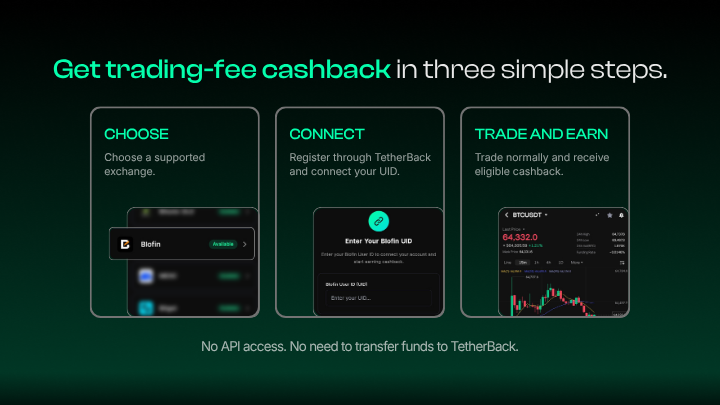
This is where TetherBack can help. Users sign up on TetherBack first, choose a supported exchange through the TetherBack platform, register through that exchange link, and then connect their new UID back on TetherBack. When the process is completed correctly, eligible trading activity can generate cashback on fees.
For futures traders, that can help reduce part of the effective fee burden over time. It does not remove market risk, and it does not change how margin, liquidation, or funding work. But it can help make trading costs more efficient for users who follow the correct signup and account-linking process.
Glossary
-
Crypto futures margin: The collateral required to open and maintain a futures position.
-
Initial margin: The amount of capital required to open the position.
-
Maintenance margin: The minimum margin required to keep the position open.
-
Liquidation: Forced closure of a position when margin falls below the required maintenance level.
-
Perpetual futures: Futures-style contracts with no fixed expiration date.
-
Funding rate: A periodic payment exchanged between long and short positions in perpetual futures.
-
Leverage: A tool that lets traders control larger exposure with less posted capital.
-
Collateral: Funds used to support the futures position.
-
Spot price: The current market price of the underlying asset.
-
UID: The account identifier used to connect an exchange account back to TetherBack.
FAQ
What is crypto futures margin?
Crypto futures margin is the collateral required to open and maintain a futures position. It supports the trade and helps absorb losses if the market moves against you.
What is the difference between initial margin and maintenance margin?
Initial margin is what you need to open the trade. Maintenance margin is the minimum amount you need to keep the trade open after it is active.
What is liquidation in crypto futures?
Liquidation happens when a position no longer meets the required maintenance margin, so the platform closes it automatically to prevent further losses.
Why do funding rates exist?
Funding rates exist because perpetual futures do not expire. The payments help keep the perpetual contract price aligned with the spot market price over time.
Who pays the funding rate?
It depends on whether the funding rate is positive or negative. When funding is positive, longs typically pay shorts. When it is negative, shorts typically pay longs.
Is funding the same as a trading fee?
Not exactly. Funding is usually a payment exchanged between traders in perpetual futures, while trading fees are separate exchange charges for executing trades.
Can TetherBack help reduce futures trading costs?
TetherBack can help eligible users reduce part of their trading fee costs through cashback when they sign up correctly through TetherBack, use a supported exchange, and link their UID properly.
Conclusion
Crypto futures margin, liquidation, and funding rates can sound complicated at first, but the core ideas are straightforward once the jargon is removed. Margin is the collateral behind your trade. Initial margin gets you into the position. Maintenance margin keeps you in it. If the position no longer meets maintenance requirements, liquidation can happen. And if you are trading perpetual futures, funding rates can affect the cost of holding the trade over time.
For beginners, understanding these mechanics is more important than chasing large positions. Futures trading is not just about market direction. It is about how the position behaves under risk. And if you do trade actively, cost efficiency still matters. TetherBack can help reduce part of the fee burden, which makes it a useful support layer for more cost-conscious futures traders.
About TetherBack
TetherBack is a crypto cashback and rewards platform built for active traders who want to reduce effective trading costs. By partnering with supported exchanges, TetherBack shares a portion of trading fee revenue back to users in the form of cashback.
The platform does not hold user funds and does not operate as an exchange. Traders continue to execute trades directly on their chosen exchange while earning rewards through the partnership structure.
TetherBack focuses on cost efficiency, transparency, and providing traders with a structured way to maximize value from their existing trading activity.