
How to Manage Risk in Crypto Futures Trading as a Beginner
Crypto futures trading can look exciting because it offers leverage, fast-moving markets, and the ability to trade both upward and downward price moves. But for beginners, the most important skill is not predicting the market perfectly. It protects capital.
In simple terms, crypto futures risk management means controlling how much you can lose, not just thinking about how much you might gain. That includes using stop-loss planning, managing leverage carefully, keeping position sizes small, and maintaining enough margin, so a normal market swing does not push you into liquidation.
For beginners, this matters because crypto futures are structurally more dangerous than simple spot trading. A spot position can fall in value and still remain in your account unless you sell it. A leveraged futures position can be closed automatically if losses reduce margin too far. That is why risk management for beginner traders should always be treated as the foundation, not as an optional extra.

Why Risk Management Matters More in Crypto Futures
Risk matters more in futures because futures trading adds leverage, margin requirements, and liquidation risk to a market that is already volatile. A trade can go wrong much faster than a beginner expects, even if the price moves itself does not seem huge.
This is why the goal of a beginner should not be to win every trade. That is unrealistic. The real goal is to avoid account-damaging losses. If a trader keeps losses controlled, a bad trade stays a bad trade. If risk is uncontrolled, one trade can turn into a much bigger setback.
Start With Smaller Position Sizes
One of the most basic rules in crypto futures risk management is to keep position size small. A common beginner rule is to limit each position to a small percentage of total trading capital, such as 1% to 2%. This reduces the damage any single losing trade can do to the overall account.
This connects directly to position sizing crypto basics. Position size is not just about how confident you feel. It should be based on how much you are prepared to lose if the market hits your stop.
For beginners, smaller size has another advantage. It reduces emotional pressure. When the position is too large, traders tend to panic, move stops, or make impulsive decisions. Smaller positions make it easier to follow the plan.
Use a Stop Loss Before the Trade Is Live
A stop loss in crypto futures is one of the most important beginner risk tools. A stop-loss order sets a level where the position will close if the market moves too far against you.
The key beginner habit is this: the stop should be planned before the trade is opened, not after the market starts moving. If you decide your stop only when you are already under pressure, emotion usually becomes part of the decision. Good risk management for beginner traders means defining the exit in advance.
A stop should also be logical, not random. It can be placed beyond support or resistance, beyond recent swing levels, or based on volatility. A stop that is too tight can get hit by normal noise. A stop that is too wide can make the trade too risky.
Position Sizing and Stop Loss Work Together
A lot of beginners treat stop loss and position size as separate topics, but they are really one system. First decide how much of your account you are willing to risk. Then use the distance to the stop to determine how large the position can be.
For example, imagine a trader has a $1,000 account and decides to risk 1% on one trade. That means the maximum planned loss is $10. If the planned stop is 2% away from entry, the position size should be small enough that a 2% move against the trade equals about $10. This is the core of position sizing crypto in beginner-friendly terms.
This approach helps prevent the common beginner mistake of choosing a position size first and only thinking about risk afterward. Risk should shape the size, not the other way around.
Keep Leverage Low
Leverage is one of the biggest reasons futures trading becomes dangerous. It increases exposure without increasing room for error.
For beginners, lower leverage means the trade has more breathing room. A small market swing is less likely to create immediate damage. It also makes stop-loss planning easier because the account is not being stretched as aggressively.
This is why a strong beginner mindset is to treat high leverage as something to avoid, not something to chase. Leverage is not an advantage by itself. It is amplified exposure. That amplification applies to losses too.
Maintain a Margin Buffer
Another major part of crypto futures risk management is keeping extra margin in the account instead of using everything to open trades.
This matters because even a trade with a stop loss can still face slippage, gaps, or unusually sharp moves. If all available capital is tied into positions, there is very little room to absorb volatility. Maintaining a margin buffer helps lower liquidation pressure and gives the trade more room to behave normally.
For beginners, this means not thinking of available margin as money that must be fully used. Sometimes the safer move is to leave part of the account untouched.

Use Isolated Thinking, Not All-In Thinking
The beginner mindset should be simple: risk should be limited trade by trade. The goal is to keep one bad trade from affecting the whole account more than necessary.
That mindset matters because beginners often overcommit to a single idea. Good risk management for beginner traders means assuming any one trade can fail. If that assumption is built into the position size, stop, and leverage choice, the account becomes much harder to damage.
Respect Funding Rates and Trading Costs
Risk is not only about price moving the wrong way. In perpetual futures, funding rates can affect the cost of holding a position over time, and trading fees can build up quickly if you enter and exit often. Even if the market view is correct, costs can weaken results.
For beginners, this means risk management is broader than “where is my stop.” It also includes asking whether the trade costs are worth the setup, especially if the plan involves frequent trading or holding a position through multiple funding intervals.
Use Take-Profit and Bracket Logic
A lot of beginners focus only on stopping losses, but planning the exit on winning trades matters too.
This helps in two ways. First, it reduces emotional decision-making once the trade is live. Second, it keeps the trade structured. Risk management for beginner traders is not just about cutting losses. It is also about knowing where the trade idea is complete.
Keep a Simple Rule Set
The best beginner risk plan is usually simple, not complicated. A workable beginner structure could look like this:
-
Risk only a small percentage of the account on one trade
-
Use low leverage
-
Define the stop before entering
-
Size the position based on the stop distance
-
Keep extra margin in reserve
-
Avoid revenge trading after losses
This kind of structure works because it is easy to repeat. Good crypto futures risk management should be consistent enough to follow even during fast markets.
Common Beginner Mistakes
A few mistakes show up repeatedly in futures trading:
Trading too large
A position that is too big makes even a normal move feel like an emergency.
Entering without a stop
Without a planned exit, a losing trade can grow into a much bigger problem.
Using high leverage too early
Higher leverage leaves less room for the trade to survive volatility.
Ignoring position sizing
The stop alone is not enough if the position is too large. Position sizing and stop-loss planning must work together.
Trying to win back losses immediately
Revenge trading usually increases risk right after judgment has already been affected by emotion. Risk management works best when rules stay consistent after both wins and losses.
How TetherBack Can Help Reduce Futures Trading Fee Costs
Once a beginner has a risk plan, the next practical issue is cost. Trading fees can add up over time, especially for users who place multiple entries and exits or actively manage positions. While TetherBack does not reduce market risk, it can help reduce part of the fee burden for eligible users.
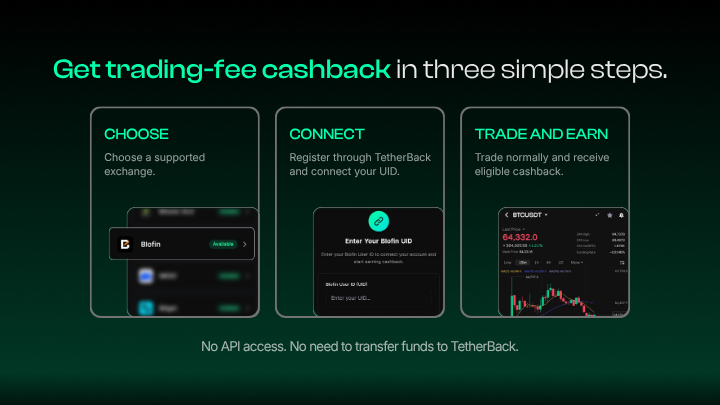
The process is simple. Users sign up on TetherBack first, choose a supported exchange through the TetherBack platform, register through that exchange link, and then connect their new UID back on TetherBack. When completed correctly, eligible trading activity can generate cashback on fees.
For beginners focused on crypto futures risk management, that matters because cost control is part of account protection too. Lowering effective trading fees does not change leverage risk, stop placement, or liquidation mechanics, but it can make the overall trading process more cost-efficient for users who follow the correct setup process.
Glossary
-
Crypto futures risk management: The process of controlling losses and protecting trading capital in futures markets.
-
Stop loss: A predefined exit level used to limit downside if the market moves against the trade.
-
Position sizing: Choosing trade size based on account risk and stop-loss distance.
-
Leverage: A tool that allows a trader to control a larger position with a smaller amount of capital.
-
Margin: The collateral supporting a futures position.
-
Liquidation: Forced closure of a position when losses reduce margin too far.
-
Funding rate: A periodic payment between long and short traders in perpetual futures.
-
Bracket order: An order structure that includes both profit-taking and loss-limiting exits.
-
Slippage: The difference between expected execution price and actual execution price.
-
UID: The account identifier used to connect an exchange account back to TetherBack.
FAQ
What is the most important risk rule for beginners in crypto futures?
One of the most important rules is to risk only a small part of your account on any single trade.
Why is stop loss important in crypto futures?
A stop loss helps limit downside by closing the trade if the market moves too far against you. It is one of the basic tools used to prevent small mistakes from becoming larger losses.
How does position sizing work in crypto futures?
Position sizing means choosing the trade size based on how much of the account you are willing to lose and where the stop loss is placed.
Should beginners use high leverage?
No. Lower leverage gives the trade more room to survive volatility and reduces liquidation risk.
Why keep extra margin in the account?
Keeping extra margin provides a buffer against unexpected market swings and lowers the chance that a normal move will push the trade toward liquidation.
Do fees matter in risk management?
Yes. Fees and funding can affect results over time, especially for active traders. Risk management includes protecting capital from avoidable costs too.
How can TetherBack help beginners?
TetherBack can help eligible users reduce part of their trading fee costs through cashback when they sign up correctly through TetherBack, use a supported exchange, and link their UID properly.
Conclusion
How to manage risk in crypto futures trading as a beginner comes down to a few repeatable habits: keep positions small, use a stop loss before entering, size the trade based on the stop, avoid high leverage, and maintain extra margin in reserve. Those habits do not guarantee profits, but they do help limit the damage any single trade can do. That is the real purpose of crypto futures risk management.
For beginners, the best progress usually comes from staying in the game long enough to learn, not from trying to hit oversized wins early. Risk management protects that learning process. And once the risk side is under control, reducing avoidable trading costs matters too. TetherBack can help reduce part of the fee burden, which makes it a useful support layer for more cost-conscious futures traders.
About TetherBack
TetherBack is a crypto cashback and rewards platform built for active traders who want to reduce effective trading costs. By partnering with supported exchanges, TetherBack shares a portion of trading fee revenue back to users in the form of cashback.
The platform does not hold user funds and does not operate as an exchange. Traders continue to execute trades directly on their chosen exchange while earning rewards through the partnership structure.
TetherBack focuses on cost efficiency, transparency, and providing traders with a structured way to maximize value from their existing trading activity.