
TetherBack or Oobit: Which Crypto Rewards Platform Is the Better Choice?
Crypto cashback can mean very different things depending on the platform.
Some platforms reward you for trading. Others reward you for spending. That is exactly why comparing TetherBack and Oobit is useful. Both operate in the wider crypto rewards space, but they are built for very different types of users. TetherBack focuses on cashback tied to trading fees on supported partner exchanges, while Oobit focuses on spending crypto through payment rails where Visa is accepted.
If your goal is to get more value from regular trading activity, TetherBack is built for that use case. If your goal is to spend crypto in everyday life and earn rewards on eligible payments, Oobit is much closer to what you need. Once you understand that difference, the comparison becomes much more straightforward.

What Is TetherBack?
TetherBack is a crypto trading cashback platform that lets users earn USDT cashback based on trading activity on supported exchanges. It works through UID linking rather than API integration, supports multiple exchange accounts in one dashboard, and allows cashback to be claimed on a daily basis.
That makes TetherBack especially relevant for active traders. Instead of trying to attach rewards to retail purchases or card spending, it focuses on a cost traders already face regularly: exchange fees. For users who trade often, that makes the platform feel practical and purpose-built rather than broad and generic.
What Is Oobit?
Oobit is a crypto payments app built around spending crypto anywhere Visa is accepted. Users can pay in store, online, and across borders, either by connecting an existing wallet or creating a built-in wallet during setup. Oobit also promotes cashback on eligible transactions, with rewards granted after payment is completed.
Oobit is much more consumer-payments focused than trader focused. Its main promise is convenience: spend crypto in real-world payment scenarios without needing to think about exchange cashback structures. That makes it appealing for people who want utility from their crypto balance rather than cashback from trading activity.
TetherBack vs Oobit at a Glance
|
Feature |
TetherBack |
Oobit |
|
Core use case |
Trading cashback |
Crypto spending rewards |
|
Reward trigger |
Exchange trading activity |
Eligible crypto payments |
|
Reward type |
USDT cashback |
Cashback on eligible payments |
|
Main audience |
Crypto traders |
Crypto spenders and payment users |
|
Access model |
UID linking |
App plus wallet connection or built-in wallet |
|
API required |
No |
Not applicable |
|
Reward timing |
Daily claim model |
Cashback granted after payment completion |
|
Platform focus |
Fee recovery for traders |
Everyday crypto payments |
|
Best for |
Active exchange users |
Users who want to spend crypto in daily life |
The biggest difference is simple. TetherBack helps users recover part of their trading costs. Oobit helps users turn crypto into an everyday payment tool with rewards attached to eligible spending.
Why TetherBack Stands Out
TetherBack stands out because it is tightly focused on the needs of traders. It is not trying to be a shopping extension, a crypto card, and a payment app all at once. It is designed around a single idea that matters to active exchange users: turning trading activity into cashback.
That focus matters. Many crypto rewards products are broad consumer tools, but TetherBack speaks directly to users who are already active on exchanges. The no-API model also strengthens its appeal because users can access cashback benefits without handing over account permissions to a third party.
Another strength is the dashboard model. TetherBack lets users connect multiple exchange accounts, track cashback data across exchanges, and claim cashback from one place. For users managing activity across more than one exchange, that is a practical advantage.

Where Oobit Performs Well
Oobit performs well in an area where TetherBack is not trying to compete: payments. Its pitch is simple and easy to understand. Users can pay with crypto anywhere Visa is accepted, including online checkouts, travel, subscriptions, and everyday purchases. That is a strong use case for people who want crypto to feel usable in real life, not just tradable on an exchange.
Oobit also benefits from flexibility. Users can connect an existing wallet or create a wallet during setup, which makes the onboarding experience more accessible for different types of users.
The cashback angle helps too. Oobit promotes cashback on eligible transactions, which is attractive for users who want their spending activity to generate some return.
Pros and Cons of TetherBack
Pros
-
Built specifically for crypto traders
-
Cashback is tied directly to trading activity
-
Rewards are paid in USDT
-
No API integration required
-
Supports multiple exchange accounts in one dashboard
-
Daily claim structure is aligned with frequent trading activity
Cons
-
Less useful for users who do not trade actively
-
Depends on supported partner exchanges
-
More specialized than consumer crypto rewards apps
-
Not designed for retail spending or payment rewards
Pros and Cons of Oobit
Pros
-
Built for real-world crypto payments
-
Can be used anywhere Visa is accepted
-
Supports wallet connection and built-in wallet setup
-
Promotes cashback on eligible payment activity
-
Strong fit for users who want to spend crypto in daily life
Cons
-
Not designed to reduce trading costs
-
Payments may include platform fees
-
Cashback is limited to eligible transactions
-
Verification is required
-
Spending limits may apply
How TetherBack Is Different From Oobit
The difference comes down to purpose.
Oobit is built to help users spend crypto. TetherBack is built to help users earn cashback from trading crypto.
That means the two platforms are not solving the same problem. If someone trades regularly and wants a way to offset exchange fees, Oobit is not the right answer because it is not built around exchange trading. If someone wants to use crypto for everyday purchases, TetherBack is not trying to serve that use case.
For the TetherBack audience, this matters a lot. TetherBack is more relevant because it is connected to the trading journey itself. It fits the behavior of users who are already active on exchanges and want more value from the activity they do most. Oobit is a better fit for payment-oriented users, not trading-oriented users.
How to Use TetherBack
Using TetherBack is straightforward.
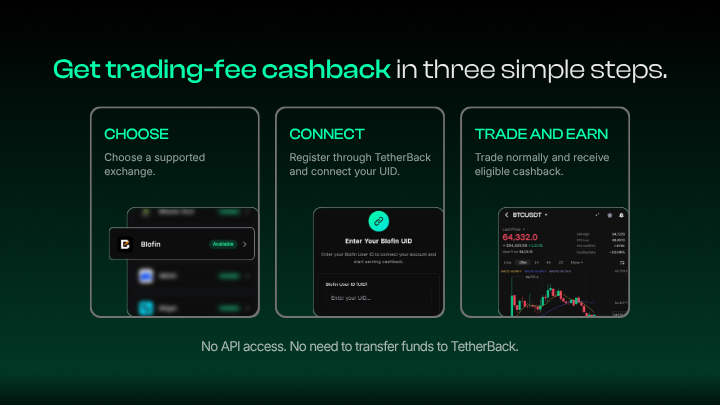
First, create your account on TetherBack and choose a supported partner exchange. If you do not already have an account with that exchange, register through the official TetherBack partner link so the cashback tracking is connected correctly.
Next, link your eligible exchange account using your UID. TetherBack does not require API integration, which keeps setup simple and avoids the need to grant trading permissions to a third party.
Once your account is connected, you can view trading and cashback data across supported exchanges from the TetherBack dashboard.
After that, you can claim your USDT cashback through the platform’s daily claim flow. For active traders, this turns regular exchange activity into extra value instead of leaving fees as a one-way cost.
Which Platform Is Better?
For traders, TetherBack is clearly the better fit.
That is because TetherBack is built around trading activity and exchange fee cashback, which makes it directly relevant to the needs of active exchange users. The no-API setup, multi-exchange dashboard, and daily cashback model all support that positioning.
For users who want to spend crypto in everyday life, Oobit is the better fit.
Its ability to support crypto payments and reward eligible spending gives it a very different kind of value. But that value sits in the payments lane, not the trading lane.
So the honest conclusion is simple. TetherBack is better for traders. Oobit is better for spenders. If the audience is visiting the TetherBack website, the more relevant platform for that user journey is TetherBack.
Final Verdict
Oobit is an interesting crypto payments product. It brings real-world spending, wallet connectivity, and cashback-style incentives into one consumer-friendly app. For users who want to pay with crypto more easily, it has a clear use case.
But it is not built for the same job as TetherBack.
TetherBack is the stronger platform for users who care about cashback tied directly to crypto trading. Its exchange-focused model, UID-based setup, and daily cashback flow make it a much better fit for traders who want to recover part of their trading costs instead of earning rewards from payment activity.
If your priority is crypto payments, Oobit makes sense. If your priority is trading cashback, TetherBack is the clear winner.
FAQ
Is Oobit a direct alternative to TetherBack?
Not really. Oobit is a crypto payments platform focused on spending, while TetherBack is a trading cashback platform focused on exchange activity. They operate in related parts of the crypto rewards market, but they are designed for different user behavior.
Which platform is better for crypto traders?
TetherBack is the better choice for crypto traders because its entire reward structure is based on supported exchange trading activity and cashback on trading fees.
Which platform is better for spending crypto?
Oobit is better for spending crypto because it is built around payments, wallet connection, and everyday purchase use cases.
Does TetherBack require API integration?
No. TetherBack works through UID linking and does not require API integration.
Does Oobit charge payment fees?
Oobit may apply payment-related fees depending on the transaction structure.
Is Oobit cashback unlimited?
Cashback applies to eligible transactions and may be subject to platform rules or limits.
Can users use both TetherBack and Oobit?
Yes. Since they serve different purposes, some users may use TetherBack for trading cashback and Oobit for crypto payments.
Glossary
-
Crypto cashback: Rewards paid in cryptocurrency or tied to crypto-related activity.
-
Trading cashback: Cashback earned from exchange trading activity, usually connected to trading fees.
-
UID linking: Connecting an exchange account identifier to a cashback platform.
-
USDT: A stablecoin designed to track the U.S. dollar.
-
Crypto payments: Using cryptocurrency to pay for goods or services.
-
Eligible transaction: A payment or activity that qualifies for cashback or rewards under platform rules.
-
Partner exchange: An exchange that works with a cashback platform to support user rewards.
-
Dashboard: The user interface where account data, cashback, and activity can be monitored.
About TetherBack
TetherBack is a crypto cashback and rewards platform built for active traders who want to reduce effective trading costs. By partnering with supported exchanges, TetherBack shares a portion of trading fee revenue back to users in the form of cashback.
The platform does not hold user funds and does not operate as an exchange. Traders continue to execute trades directly on their chosen exchange while earning rewards through the partnership structure.
TetherBack focuses on cost efficiency, transparency, and providing traders with a structured way to maximize value from their existing trading activity.