
Most Common Crypto Futures Trading Mistakes Beginners Should Avoid
Crypto futures trading can look simple from the outside. Prices move fast, leverage is available, and traders can try to profit whether the market goes up or down. But for beginners, that same flexibility often creates avoidable mistakes.
The first thing beginners need to understand is that futures are not just spot trading with more profit potential. Futures add leverage, margin requirements, liquidation risk, and in many cases funding costs. That means a trade can fail much faster than in spot markets, even if the price move itself does not look very large.
That is why the biggest beginner advantage is not prediction. It is avoiding common crypto trading mistakes. A beginner who avoids major errors usually lasts longer, learns faster, and protects capital more effectively than someone chasing fast wins.

Overusing Leverage Too Early
The most common of all crypto futures mistakes is overleveraging.
Leverage allows traders to control a larger position with a smaller amount of capital. That sounds attractive, but it also means losses hit the account much faster.
For beginners, the real problem is that high leverage leaves very little room for normal price fluctuation. Even a small move can become dangerous when the leverage is too high.
This is why one of the clearest ways to avoid liquidation crypto beginners should follow is simple: use lower leverage and think of survival first.
Ignoring Maintenance Margin
Another major beginner futures trading mistake is focusing only on opening a trade and ignoring what is required to keep it open.
Opening the trade is not the end of the risk process. If the market moves against the position and the account no longer supports the required margin, the trade can be closed automatically.
Beginners often think, “I only need enough balance to enter.” In futures, that is not enough. You also need enough cushion to survive normal volatility.
Trading Without a Stop-Loss Plan
A very common crypto trading mistake is entering a futures position without already knowing where the trade should be closed if it goes wrong.
For beginners, this matters because futures move quickly. Without a stop-loss plan, a small mistake can grow into a much larger loss. And because leverage is involved, the time available to make a calm decision is often shorter than expected.
A stop loss in crypto futures is not a guarantee of perfect execution, but it is one of the simplest ways to reduce damage from a wrong trade.
Choosing Position Sizes That Are Too Large
Many beginners confuse small margin posted with small risk. That is not how futures work.
Your real exposure comes from the full position size, not just the amount of collateral you committed.
This is one of the most common beginner futures trading mistakes because the numbers can feel misleading. A trader may think the position looks manageable because the upfront margin seems small, but the actual market exposure is much larger.
Good position sizing is one of the clearest forms of risk management. Poor position sizing is one of the fastest ways to lose control of the account.
Treating Futures Like Spot Trading
A lot of beginners approach futures with a spot-trading mindset. That creates problems immediately.
In spot trading, if an asset falls, you usually keep holding it unless you decide to sell. In futures, especially perpetual futures, the position can be closed automatically if margin falls too low.
This is a major reason why common crypto trading mistakes happen in futures. Beginners assume they can just wait for the market to come back, but leveraged contracts do not always give them that option.

Holding Losing Trades and Hoping
Hope is not a risk-management strategy.
This becomes especially dangerous in futures because leverage can turn a manageable loss into a liquidation event. A trader may be emotionally attached to the idea that the market will reverse, but the platform only sees the margin level.
One of the most practical ways to avoid liquidation crypto beginners should follow is to accept that some trades are invalidated. When the trade idea fails, the position should be managed accordingly.
Ignoring Funding Rates and Fees
Beginners often think only about entry price and exit price. In perpetual futures, that is incomplete.
That means a trade can be directionally correct and still underperform because holding costs reduce the final result. This matters even more for traders who keep positions open longer or trade frequently.
One of the more overlooked crypto futures mistakes is thinking that risk is only about price movement. Real trading risk also includes cost drag.
Trading Too Many Coins or Too Many Setups
Another common beginner futures trading mistake is jumping constantly between different assets, setups, and narratives.
For beginners, fewer markets are usually better. Watching one or two major pairs closely is often more useful than trying to trade every fast-moving chart at once.
Futures already add enough complexity through leverage, margin, and order execution. Spreading attention too widely usually makes mistakes more likely.
Entering Trades Out of Panic or FOMO
Fear of missing out is one of the oldest trading mistakes, and it becomes worse in fast crypto futures markets.
In futures, bad entries are even more dangerous because leverage reduces your room for error. A poor entry in spot might be frustrating. A poor entry in leveraged futures can become a liquidation problem.
This is why common crypto trading mistakes are often emotional mistakes first and technical mistakes second.
Not Learning From Losses
One of the most persistent beginner futures trading mistakes is repeating the same errors because trades are never reviewed.
For beginners, every losing trade should answer a question:
-
Was the leverage too high?
-
Was the stop too loose or missing?
-
Was the size too large?
-
Was the entry based on emotion?
-
Was the cost structure ignored?
Losses are part of trading. Repeated losses from the same mistake usually mean the process was never fixed.
Believing Futures Are a Shortcut
A final beginner mistake is treating futures as a fast-track product rather than an advanced one.
This does not mean beginners can never learn futures. It means the learning curve should be respected. The safest beginner approach is usually to focus on small size, low leverage, clear stops, and strict discipline.
How to Avoid These Crypto Futures Mistakes
Most common crypto futures mistakes can be reduced with a few simple habits:
-
Use lower leverage
-
Keep position sizes small
-
Understand maintenance margin
-
Define the stop before entering
-
Avoid emotional entries
-
Track fees and funding
-
Review losses honestly
None of these habits guarantee profit. What they do is reduce the chance that one careless trade turns into a major setback.
How TetherBack Can Help Reduce Futures Trading Fee Costs
Once a beginner starts avoiding the biggest structural mistakes, the next practical issue is cost. Trading fees can build up over time, especially for active futures traders. Funding and liquidation risk are separate from fees, but exchange costs still matter to overall performance.
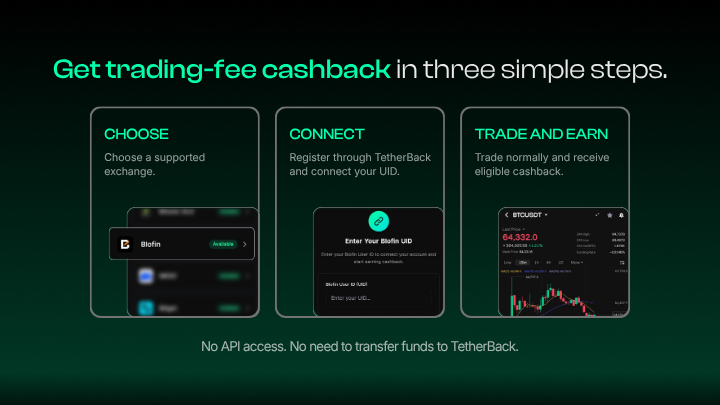
This is where TetherBack can help. Users sign up on TetherBack first, choose a supported exchange through the TetherBack platform, register through that exchange link, and then connect their new UID back on TetherBack. When completed correctly, eligible trading activity can generate cashback on fees.
For beginners, that can help reduce part of the effective fee burden over time. It does not remove leverage risk, liquidation risk, or emotional mistakes, but it can make the trading process more cost-efficient for users who follow the correct signup and account-linking process.
Glossary
-
Crypto futures mistakes: Common errors traders make when using leveraged futures products.
-
Leverage: A tool that increases exposure by allowing a larger position with less capital posted upfront.
-
Margin: The collateral supporting a futures trade.
-
Maintenance margin: The minimum required collateral needed to keep a futures position open.
-
Liquidation: Forced closure of a position when margin falls below required levels.
-
Funding rate: A periodic payment mechanism used in perpetual futures.
-
Stop loss: A planned exit intended to limit downside when the market moves against the trade.
-
Position size: The full value of the futures trade being controlled.
-
FOMO: Fear of missing out, often leading to rushed entries.
-
UID: The account identifier used to connect an exchange account back to TetherBack.
FAQ
What is the biggest mistake beginners make in crypto futures?
One of the biggest mistakes is using too much leverage too early.
Why do beginners get liquidated so often?
Beginners often get liquidated because they combine high leverage with weak margin buffers and no clear stop-loss plan. That leaves very little room for normal market volatility.
Is ignoring maintenance margin a serious mistake?
Yes. Maintenance margin is what keeps the trade open after it has been entered. Ignoring it can lead directly to liquidation when the market moves against the position.
Are funding rates part of crypto futures risk?
Yes. Funding rates can affect the cost of holding perpetual futures positions over time, especially for traders who keep trades open longer.
Is futures trading harder than spot trading?
Yes, for most beginners it is. Spot trading does not usually involve the same leverage and liquidation structure that futures do.
How can beginners avoid common crypto trading mistakes?
Beginners can reduce mistakes by using lower leverage, smaller positions, clear stop-loss plans, and a disciplined review process after losses.
How can TetherBack help futures traders?
TetherBack can help eligible users reduce part of their trading fee costs through cashback when they sign up correctly through TetherBack, use a supported exchange, and link their UID properly.
Conclusion
Most crypto futures mistakes beginners should avoid are not complicated. They usually come from the same patterns: too much leverage, poor margin awareness, oversized positions, missing stop-loss plans, and emotional decision-making.
For beginners, the best approach is not trying to be aggressive. It is trying to stay structured. Keep leverage lower, size smaller, respect liquidation risk, and treat futures like an advanced tool instead of a shortcut. And while discipline matters most, cost control still matters too. TetherBack can help reduce part of the fee burden, which makes it a useful support layer for more cost-conscious futures traders.
About TetherBack
TetherBack is a crypto cashback and rewards platform built for active traders who want to reduce effective trading costs. By partnering with supported exchanges, TetherBack shares a portion of trading fee revenue back to users in the form of cashback.
The platform does not hold user funds and does not operate as an exchange. Traders continue to execute trades directly on their chosen exchange while earning rewards through the partnership structure.
TetherBack focuses on cost efficiency, transparency, and providing traders with a structured way to maximize value from their existing trading activity.